Community Micro Fiction: Edition Four –When Nature Turns

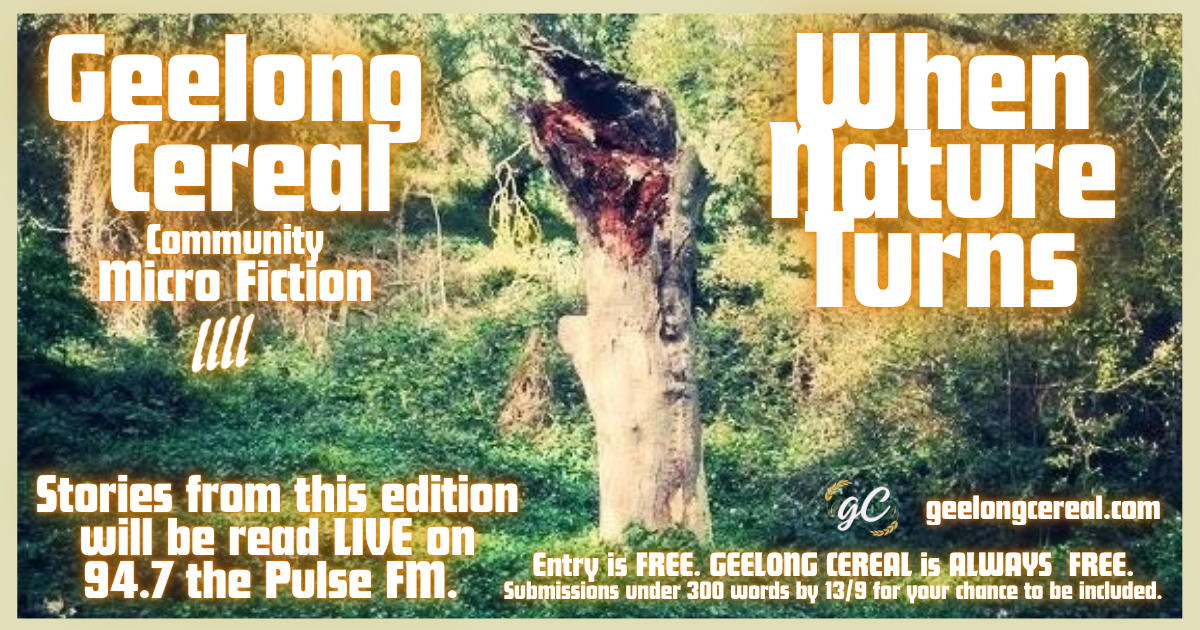
Please enjoy our biggest collection yet! Many of these pieces featured on air last Friday night at the Geelong Cereal live reading "Smooth Talkers" on the Pulse 94.7FM. Well done everyone!
Micro Fiction
Randompedia III
By Martin Smith
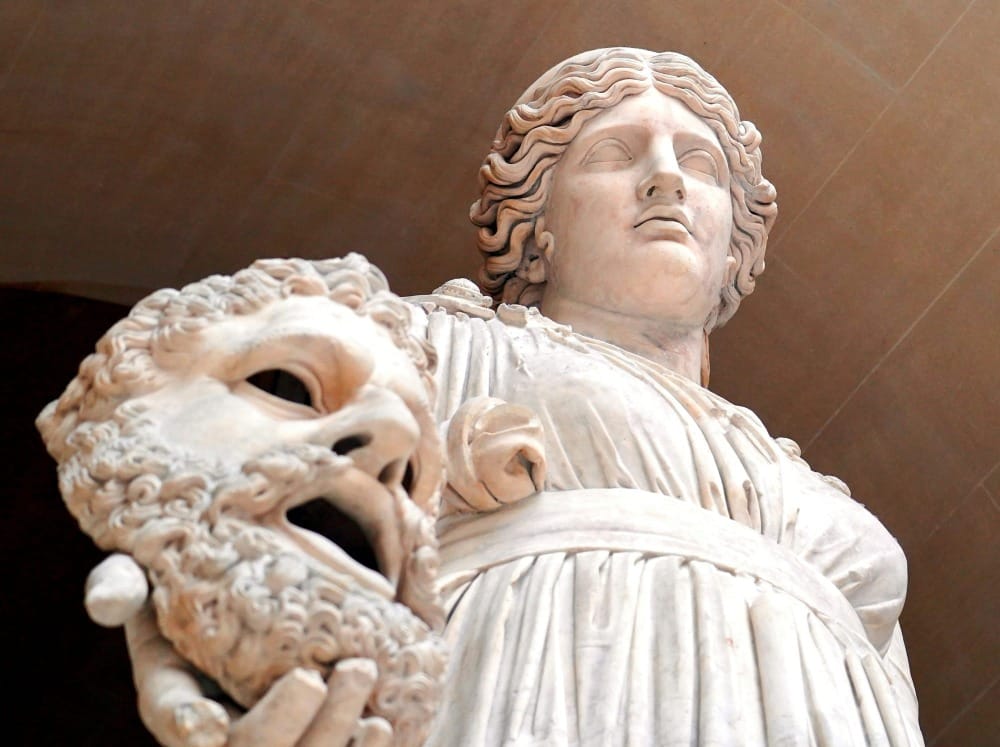
Dyslexippus, also known as ‘the woman who died from laughing at her own joke’, was a 3rd-century BC Greek Stoic absurdist and keen weekend angler who died suddenly whilst workshopping with a group of philosophers at the Lyceum. When the question ‘How many surrealists does it take to change an oil lamp?’ was posed to the group, Dyslexippus cried out, ‘sfhi,’ whereupon she died in a fit of laughter.
Miscommunication
by Brett J Cole
'Your competence isn't the issue, Greg,' the supervisor said. 'Honestly, when it comes to understanding weather patterns, you're considered one of the best in the field. The problem's more about... this.'
'This, as in... what?' Greg asked, continuing to spin about, knocking the equipment over yet again.
'This! What you're doing right now,' the supervisor said. 'Everything else is fine, but for some reason every time there's a tornado involved you start this nonsense. You haven't been monitoring it at all!'
Greg suddenly stopped spinning about, arms outstretched as he regained his balance. He frowned, deep in thought, before his eyes widened.
'Ahh, damn it!' he exclaimed. 'Monitoring... I get that confused with the other one all the time!'
Far off in the distance, the tornado they'd been tracking suddenly ground to a halt, wondering why its mentor had done the same.
Rare and Empty
by Pam Swanborough
(From Things With Teeth By Moonlight)
‘You should want more than I can offer.’
‘You mean Love?’ She spoke the word as if it were rare chocolate: a soft thing, heard tales of but never tasted.
But he finished the packing anyway.
Really, they’d both already left months ago.
The Yield
by Jo Curtain
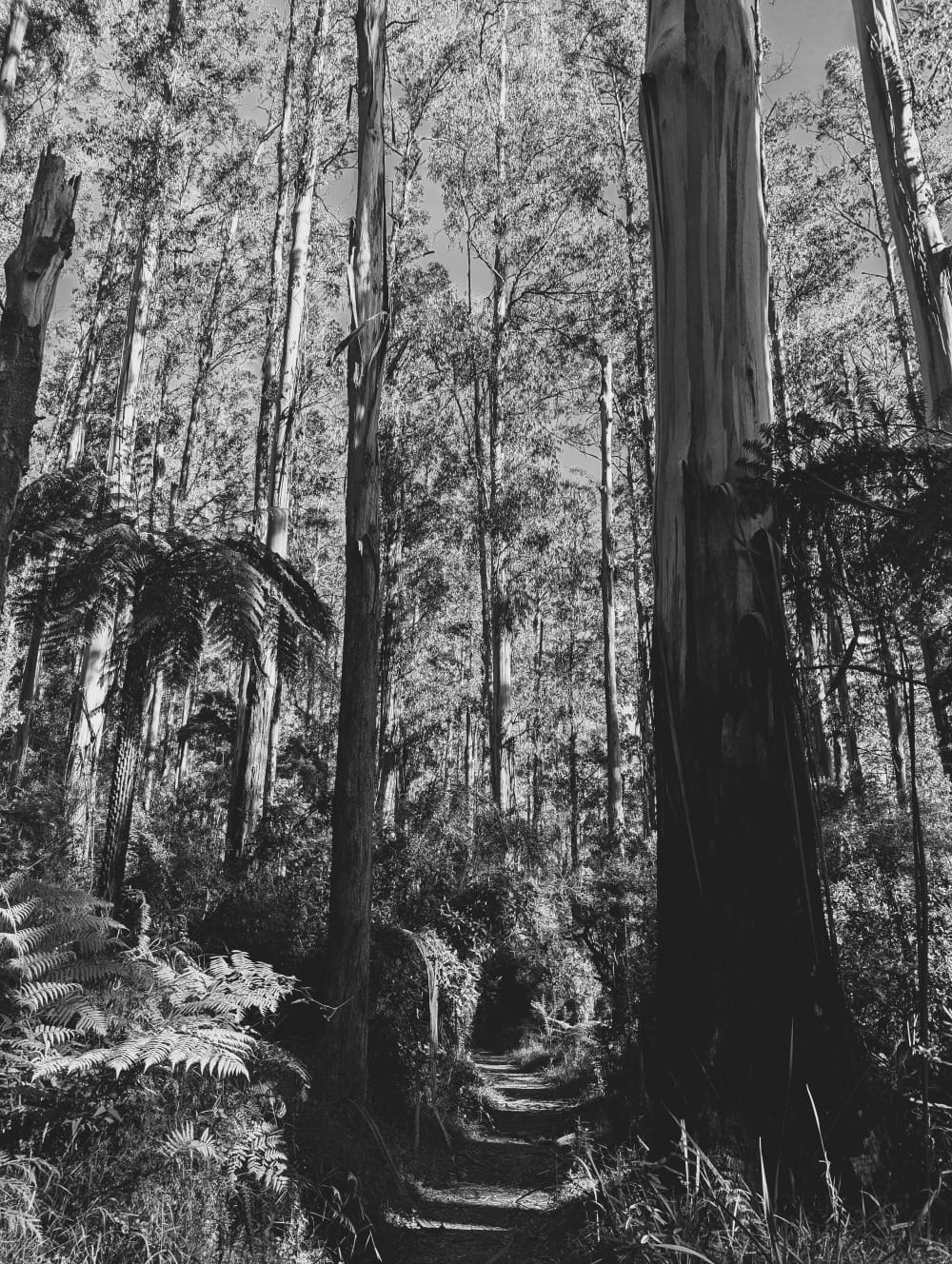
The cool mist dissolves over Blackwood’s crooked horizon, unveiling a bleeding sky. Sways of golden wattle defiantly ignite the mountain ash forest, signalling winter's end. Unfamiliar with the area, I pause at the noticeboard, commemorating a history of logging. I trace my finger along the circular dotted line. My stomach churns—Giants’ Rest. I grab the folder from the passenger seat—the one left on my doorstep four weeks ago. Inside are the faces of the missing. All of them vanished after hiking here.
A strange pull draws me in. I follow the tannin-stained creek along a narrow, submerged gravel path. The air is electric with the sharp chittering of hidden insects. Green paddocks rise like isolated islands in an inland sea—refuges for sedate cows whose heads all nod toward an uncertain horizon. Jasmine tangles with barbed wire on the rotting posts of progress. Its fragrance heavy, almost suffocating. A sudden gust of wind chases down the blossom, carrying a rustle of whispers, leaving me at the wooded wall of giants.
So high they cast no shadow.
I step into the forest. The stillness is breathless. I drag my boots through heavy ferns, fingertips brushing coarse bark. I blink. Hours vanish. The light is gone. I am being watched. Through the thick fog, something hooks my ankle and rips my legs out from under me. The ground hits me hard. Above, the trees lean inward, blotting out the sky. I see the missing people—buried in the wood—their contorted faces trapped inside the bark. Swallowed.
Sinuous limbs twist around my body, dragging me underground. Sodden earth seals my nose and mouth, saturating my lungs with a rotting mass. Grit wedges beneath my fingernails. My hips groan under the immense pressure. Frenzied insects colonise my skin. Above, the giants' canopy separates, letting in the rain to begin the slow business of emulsification.
Time loses meaning.
I dig my way out. Ragged cloth hangs from my frame. My fingers scrape along bare bone, trace the impressions of decayed sinew and missing muscle. I begin to mould my new body. I gather earth, along with wriggling worms, and pack it into my hollow crevices. I fill my hip sockets and my pelvis. I round out my thighs and stomach. I stretch out my neck and spine. Where my toes used to be, mud squelches through the gaps.
It is nearly time. The spring air is thickening as the fog drifts back through the mountain ash. They are waking. Footsteps crunch in the distance. My new body pulses with borrowed life. I unhinge my jawbone, stretching crumbling teeth into a wide, welcoming smile, waiting to greet the hikers.
Sour Milk
by Jacinta Orillo
The scar on my thigh itches from time to time, even after all these years.
I was probably 10 years old when the windows blew out in my bedroom one night. It was during one of those heat waves that would scorch us for a week. I’d been sleeping on top of my bedsheets. I’m not sure what woke me; the explosion? Everything crashing to the floor? Everyone shouting in panic? It certainly wasn’t the glass that impaled my leg. I didn’t notice that until I tried to walk, and realised I couldn’t.
It was the old Munitions factory behind Mr Banks’s farm. There were always rumours about what the Army were using that factory for. Of course they just brushed it off. The heatwave, the lack of rain, something about a spark from a compressor setting dry leaves on alight, and then powder residue, and then … KA BOOM!!
So when Old Banksy had to empty out all his milk cans, we put it down to the explosion spooking the cows. Turning the milk sour.
Then Bobby from down the road went for a swim in the creek. Everyone thought he got sunburnt, even though it’s surrounded by trees. He was taken away by ambulance a few days later.
That was around the same time I was woken up by a horrible stench. Smoke mixed with burnt meat.
It was coming from the Banks farm.
Next day we saw the smouldering pyre of his cows.
The rumour about Bobby being taken away to a hospital in the city started circulating. Apparently his skin was falling off. Other people were taken away for the same thing.
That’s also when I found the rabbits by the fence line. I never want to think of that again.
Some big wig Government folk came and spoke to dad. He had that pinched look on his face as he told mum and I we had to move out. But the pay-out was good.
They completely razed the town after that.
Now, when I drive past on the way to my Oncologist, I see billboards advertising land for sale, promising the ‘Seascape without the Escape’.
I glimpse those models with their big fancy teeth; a lot of our teeth fell out, so did dad’s hair. They’re promising Utopia. I guess they’ve fixed that land up.
Surely?
Our Symphonic Spark
by Steve Gray
You are quirky, soft, enticing and beguiling. There was a bonding warmth that developed early on, which has led us to examine our ever-changing, intriguing world.
We hold each other dear, oh sure, there have been challenges and a range of deeply wonderful adventures, exploring seasons of endless intrigue.
Fish Don't Have Souls
by Abbey Maffescioni
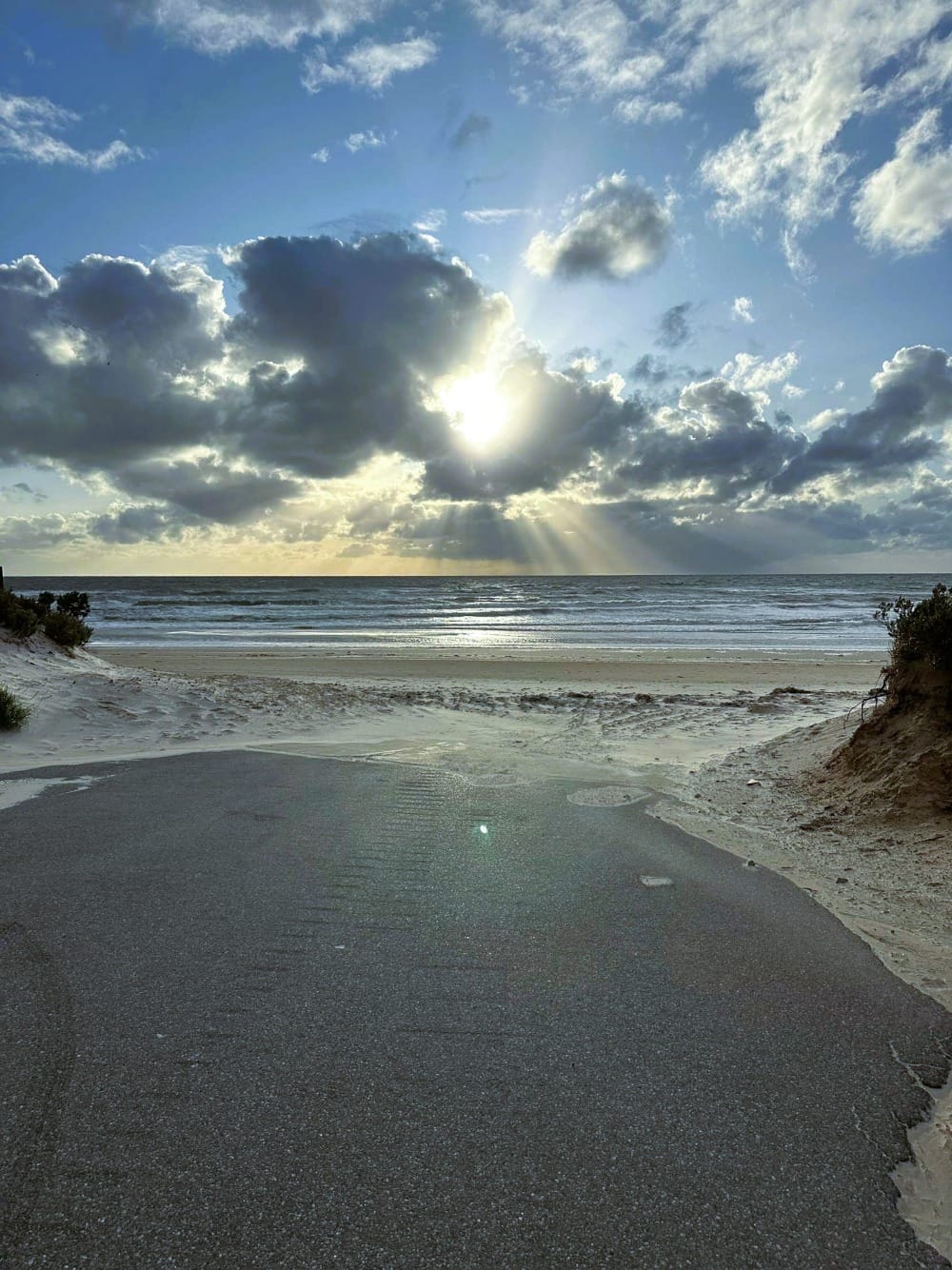
“Fish don’t have souls.”
Someone told me that once, a thought spoken aloud amongst chiming school bells beckoning us forward. Bodies move, wriggling to enter the great timber doors, small frames flowed over to litter large white pews. Blonde strands fold over one another forming two taut ropes, meticulously worked by my mother's faithful hands.
Either side of frostbitten ears, hands cling to metal chains, creaking, I swing back and forward. My polished shoes reach upwards, brushing the clouds. I considered leaping above, up and over the grand expanse; I would surely skim across it like a worn rock on a calm morning.
Fr Andrew told me heaven is without end, a meadow that stretches beyond the horizon, further than perceivable.
My grandfather worked piously, braiding rainbow string for hours as locks and locks splayed over aching wooden bones. Grandfather’s great tails of opal were knotted together in intricate rows, "Colours bewitch them, for they cannot comprehend much more". Nanna called him an architect, creating a world where fish can escape the harsh seas.
Someone told me once eyes are windows to the soul. What happens to my soul when I blink? Does it blink too? I don’t think Fr Andrew likes my questions anymore.
That night we marched to the pier and sat with Grandfather. I watched him build townscapes in the water; the architect wove parks of rosy blush and glowing amber, fluorescent streaks flashed in the sea below.
At last, the wriggle of the net came, before stiffening at the heavy burden, energy sparked and crackled, everyone jumped, heaving the great city onto the pier. Spilling onto the croaking planks, chaos unleashed squirming unrelentingly. One fluttered into my lap, little hands wrapping around shakily, I could feel it breathing in and out. The creatures pace hastened, climbing higher as it thrashed, a rowboat on churning thunderous seas until, until nothing . . .
Its scales flashed like the sun winking over waves, it stared at me with pitch black unblinking eyes.
Grandfather told me once fish don't have eyelids. How horrifying, I thought, to live your life baring your soul to all, as you peer into an unending black abyss staring right back.
Fr Andrew peered down at me during confession as I arranged my thoughts at his feet. The likeness of our saviour stared, casting hues of emerald and sapphire beneath. His lights dimmed as Fr Andrew expressed sacrifice was only for our salvation. The thoughts sunk deep, pooling at the depths of my mind. I kissed my dog on the forehead before I climbed the stairs to bed that evening.
From school I could see the tides changing, smashing against white cliffs. The crashing sounds rolling across tiny critters was soon drowned out by the chiming bells calling me towards deliverance, each small creature taking their place in the pristine chapel. Diligently staring towards enchanting prismatic shards of light, braids scattered across my skull, I kneel below muttering.
"Fish don't have souls."
When Nature Turns
by Steve Gray
Spring, a total scam, sneezes and wheezes. It's all part of the plan. There’s sunshine, rain, wind and all that, it reminds me that I must grab my hat.
People get busy, mowing and more. Then daylight savings and we head for the door. Look out, spring summers coming fast, it won’t be long ‘til spring's in the past.
Kin
by Brett J Cole
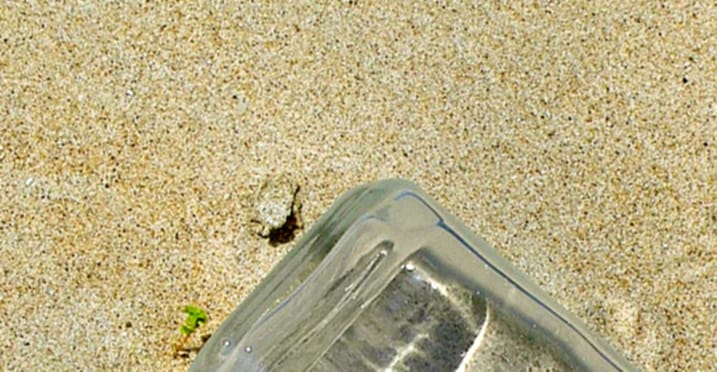
A dry wind brushed at the shore, stirring grass which had lost its colour, sun-bleached white, like the hair on an old man's head and just as scarce. A bottle, dark like congealed molasses, jutted out from the sand where it had settled in defeat, ill-fitting amongst the grains which had long ago been its true form. The wind picked up and the sand crept higher around the bottle, as though trying to hide the atrocity of such fallen grace.
The bottle made no complaint, comfortable in its shame.
Play Date
by Pam Swanborough
(From Things With Teeth By Moonlight)
He’s playing with you, they said.
And it was true. Obvs. Had it been a date, that first time? It sure felt like a date…
It was not a date. It was fun, it was all the things, but... Damn. Playing. He was playing with her.
Yet she was having fun.
Find someone serious about you, they said. Yeah, serious.
The last one had been serious. Seriously crazy. Seriously disturbed. But deeply, deeply serious about her.
So she... Swipe right? Give it a go. Seriously: the guy turned out to be awful. She tore a hamstring running to catch a bus, any bus, away from such awful. Happened that the bus took her to where she was having the fun. Coincidentally. She was already smiling before she arrived. Despite the hamstring thing.
He's playing with you.
I know.
Facebook, a 'friend of friend'. With a motor bike. Is this a date, cos I don't know about a date. No it's not a date, let's just have a coffee.
Dear reader, it was a date. She declined the offered bike ride. Paid for her own coffee, didn't finish the (seriously delicious) cheesecake.
You deserve someone who doesn't just play with you.
That was true. She wanted reasons to dress up, walk out, make late night phone calls about nothing special that lasted an hour. Playing was... not approved. She wanted to connect with...
Try again, forget playing; chat a bit, or –OK – swipe right. Sweet mother of god, it was the same guy, hamstring guy, different name, different details, different avatar. Was that his own hair, surely not? He laughed at his own jokes. Also: the jokes weren't funny. He wanted to go on somewhere, go drinking.
She paid the bill, left. This was getting expensive, in several senses of the word.
She wanted.
I just: want. Yeah but playing.
Yeah. Only. Good, isn't it? And she dressed up. And she went out. And it was fun. And it was sad.
The Blanket
by Adam Stone
Bless his in-laws. They meant well, always. Wonderfully Scottish, they somehow managed to maintain their Scottishness in regional Victoria. Jim was a plumber who ended up working in security. Davina was a homemaker and chief organiser.
They thought a great deal of their son-in-law. The birthday card read, ‘To our braw son-in-law.’
The present? A crocheted blanket for him to place over his knees when working from home in the colder months.
‘Save on heating,’ they said.
‘What a great idea,’ he lied and shared the kind of smirk with his wife that couples share without looking at each other, and without actually smirking.
Really, he felt like a prick, particularly when he began to appreciate the hours that had gone into making the blanket.
And then his mother-in-law explained the significance of the Scottish flag she had crocheted in each corner. ‘The Legend of St. Andrew's Cross,’ she explained. ‘We thought this was meaningful, knowing you were born in St. Andrews hospital.’
Oh my God, he thought. I don't deserve this.
Tears all around as he hugged them.
Bless his in-laws. Aye.
UH OH
by Pam Swanborough
(From Things With Teeth By Moonlight)
A line of highly polished, black cars is leaving an unremarkable office building, pulling out of the basement carpark in a dreary outer quarter of the capital.
The President and his chauffeur are in a convoy, following the unmarked police car that has pulled out to cross the footpath; more security follow immediately behind in third place. They pause, waiting for a break in the passing traffic.
The President’s chief accountant, in a natty little roadster, is patiently waiting in fourth place.
There's a barely audible pfft.
A small hole appears in the windscreen of the accountant’s car, like a tiny mouth saying oh. The accountant leans forward as if to inspect it. Only, he doesn't stop at the tipping point but keeps leaning forward until his head hits the steering wheel. A matching small hole has appeared in the back of his coat. And a third one in the seat behind him.
A wet red rose blooms on the fabric of his coat, the second tiny hole at its very centre.
Oh! says each tiny hole.
Could we see it, we’d find a corresponding bloom, glistening in the middle of his shirtfront.
The convoy rolls away, unawares.
It could be over nothing
By Denise Main.
Agnes’s head whirled with all sorts of possibilities; the why’s, what ifs and how comes. It could be over nothing, she anguished, stymying any chance of her falling back to sleep again.
The whole thing that had put her on edge began early the previous day. She was lost in thought as she was restocking the crime fiction shelves well away from the general thoroughfare, when by sheer chance she heard two people talking in a nearby aisle; she recognised the voices. At first, she took no notice until the male’s voice, the Head Librarian’s, rose sharply, followed by muffled sobs.
‘Shut up for God’s sake, or we’ll be heard,’ he hissed. ‘Go to the stack room, I’ll follow.’
Agnes froze. ‘What’s going on here?’ she muttered softly. Leaving the book trolley, she went to the aisle and peered around the corner to where she heard the voices, to see him, walking swiftly away, followed by the weeping young woman. Alarmed, Agnes hurried to the stack room, the door was shut, she opened it to see the newly appointed librarian alone and at work on the computer. She looked up at Agnes, a look of surprise on her pretty face, but with no sign of crying or distress.
‘Can I help you?’ she asked with a bright smile.
‘Oh, just checking to see if there is anything in stack that needs shelving,’ Agnes mumbled. ‘Are you OK here? Everything alright?’ she managed to say.
‘Thanks, everything OK, I’m fine. Should be finished here by lunch time,’ the young librarian answered cheerfully. Agnes had no option but to return to the task she had left, but decided to investigate to see if there was anything to be concerned about. The inner sleuth in her was on high alert.
As usual, she took her boxed lunch to the favourite bench beside the lake. After a few minutes of being lost in thought about the musical treat planned for that night, loud voices caused her to look up. What she saw, in the shadows of a copse of trees, was him, Head Librarian, in an angry argument with a thickset man. She gasped when Head Librarian was roughly shoved, punched on the jaw and staggered back under the assault. He regained his balance and quickly ran through the trees to the path leading to the other side of the lake.
Agne’s heart raced as she watched the shaven-head man walk toward her and then without a glance in her direction, sauntered passed. Something bad is going on, she thought. I should take care to note everything I have seen and be able to describe it if I’m called on to do so.
When Agnes returned to the library, she went straight to Head Librarian’s’ office and knocked.
‘Enter,’ he called. ‘Yes, Miss Christie, what can I do for you?’
She quickly scanned his face and expression for any sign of the altercation she had witnessed; nothing. ‘Oh,’ she stammered, ‘I heard you wanted more help in the stack room?’
‘No thank you, all attended to,’ he said, a wide smile on his seemingly unblemished face. ‘Please take a seat, I believe you are a writer. I’m very interested to hear what you are currently writing.’
‘I write mainly crime fiction,’ she said as she sat down, ‘always on the look out for material for my next novel.’
‘Good for you, you must let me know if I can be of any help.’
‘Thanks, though it’s not unusual for me to see something in what others might say, it could be over nothing.’
She looked squarely into his smiling face and the upturned shirt collar covering the side of his jaw.
The First Light of an Early Spring Morning
by Ian Chisholm
He stood on the flat grey-green granite rock and shivered. His eyes scanned below, beyond the fuzzy outline of the trees to the grey wash blotting out the green tree tops of the forest. Why do I do this? he asked himself, the words formed billowing plumes of condensation as they escaped his lips. The answer to his question was simple enough. He was compulsive and idealistic. Fanatical, his wife had said, more than once.
For over ten years, since he began to take an interest in the subject, he had been searching without compromise for that perfect moment. In the beginning, as he knew it would, that passing interest became a hobby, a hobby became an obsession, which eventually became his career; and still his obsession.
The first light of early morning is always the best. He was well aware of that. Ever since he began studying those magazine. The articles and stunning reproductions were inspirational. Once his efforts were out there and noticed, his confidence, knowledge and skill multiplied fast. His technical knowledge came through diligent study and constant practice. His lecturer had said all along that technical skills can be taught, but you can’t teach inspiration, imagination, knowing when is the exact moment to go for it.
Early morning light changes minutely every passing second. His aim was to choose from all the possibilities available, then hold every perfect second waiting for that magical golden moment, which can never be repeated. Soon, all those perfect seconds pass and the world becomes normal again.
From his vantage point on the flat granite rock the light began to flow over the misty valley, like a mountain stream, rippling over dips and ridges, enveloping tree tops and rocky outcrops. Shadows added contrasting velvety purple accents.
A quick lens change, an aperture adjustment, an eagle on the wing, a kangaroo crouching. A glancing ray of sun slicing through the fog, a flash of red and green feathers on a low branch. That was his reward for another chilly early morning excursion into nature.
Micro Serials
SCILLA: Part Three
By Lella Cariddi OAM
Once free from my father’s clutch, I distance myself from the smell of stewed turnips and onions escaping from his briefcase. Before tasting the brown paper packaged Cornish pastie he has shoved into my hand, I blow into my monogrammed linen handkerchief. A single bite of the barely warm pastie and it makes me want to throw-up. Trying to appear polite, I bite and chew to the pastie’s last flake.
While other passengers progressively leave in cars, on motorbikes, in the back of trucks, my father introduces me to Aldo, the taxi driver. I’m surprised to find that he who has been harping about being short of money, hired a taxi to transport us from Station Pier to the rooms he’s renting behind a butcher shop two hundred miles away.
Without looking at me in the eye, Aldo offers me a limp handshake and says in Italian: ‘Would you like to see the city’s heart before hitting the highway?’ Before I could say ‘yes’, my father jumps in: ‘Of course she does. Pity that pubs close at six o’clock, otherwise I’d buy you a beer for your trouble’. Aldo leads us to his taxi - a Fiat 500 "Topolino", adjusts the cushions in the driver’s seat to make himself see over the dashboard, and starts burning down Flinders, Elizabeth, Burke, and Russell Street. The only signs of life are half empty trams trundling through the city’s centre, and chintzes of light escaping from tall buildings’ windows.
I have no sense of the geography between Naarm / Melbourne and the rooms in the country. Nor of the conditions of the highway, we’re travelling on fringed with trees I don’t recognise. Whenever Aldo hits a pothole a sense of foreboding creeps up on me, and feeling nauseous I repeatedly ask: 'Papa`, how long to go?'
Two-Sentence Horror Serials

Count 2 Ten: Part 4 - The Bloody Chamber
By Martin Smith
It was that time of the month—a time the Count savoured above all else for it was the only time of the month the Countess permitted him to enter her boudoir and lay a fang on her and feast upon her in her chamber—and the door creaked shut as an eager, bloodthirsty Count felt his way in the pitch dark toward his slumbering wife. But, alas, the Count released a scream of horror for he had once again tripped and tumbled and doused himself, and he cursed the Countess and her yet again failing to push fully under her bed that bloody chamber pot of hers.
Le canal
By Peter McDonald, Special Correspondent for Horrifying Affairs Reporting from Western Europe
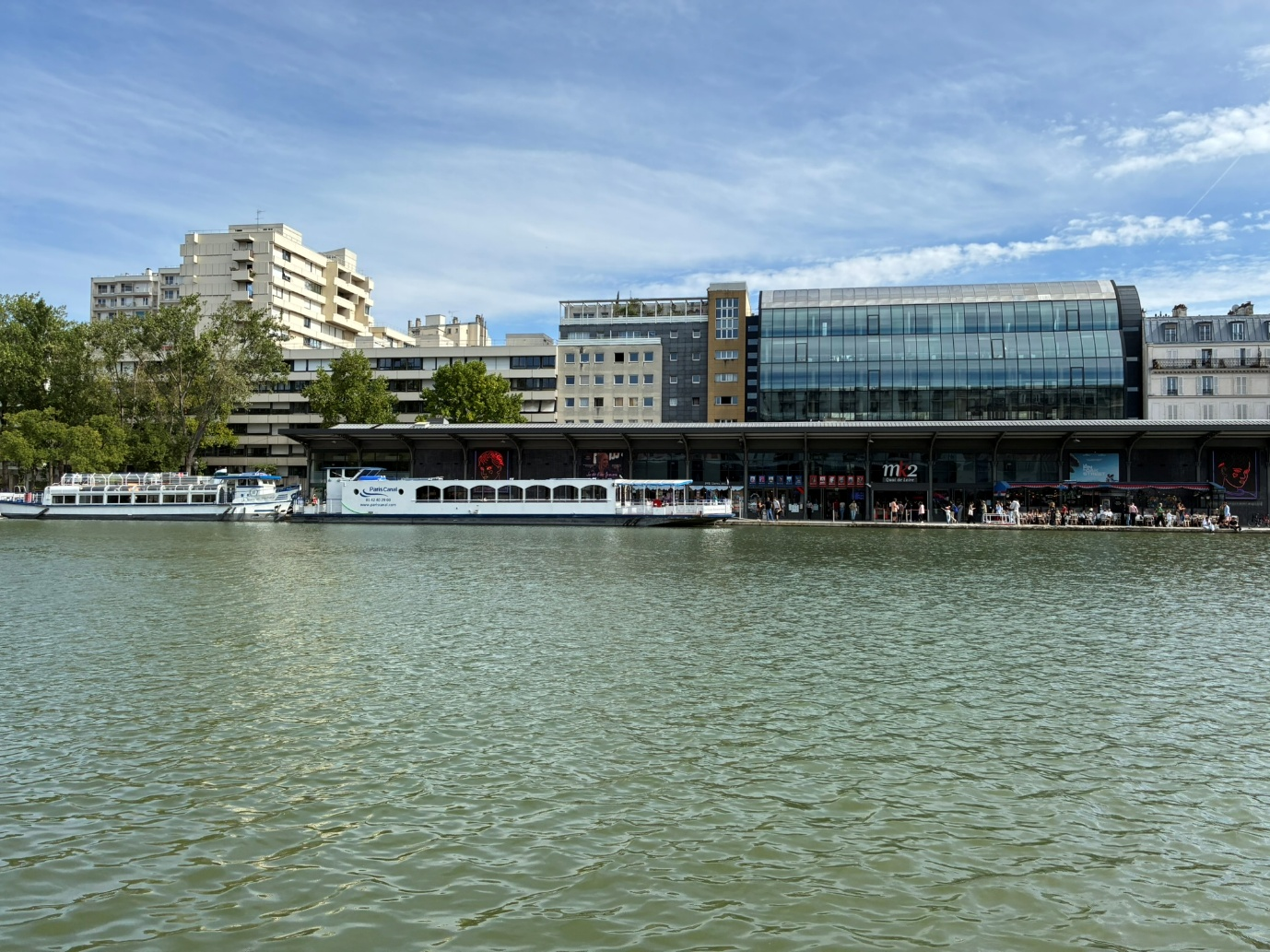
The peaceful canal beckons me to enter with its sweet whispers as I ponder my task of reaching the other side, just like the chicken and the road. But as I wait for the safety of the péniche I am suddenly yanked into the water by the ghostly hand of a headless figure, a fantôme who has come to collect a river tax most foul.
Renovations of the Mind: Part Two
by Greg Fisk
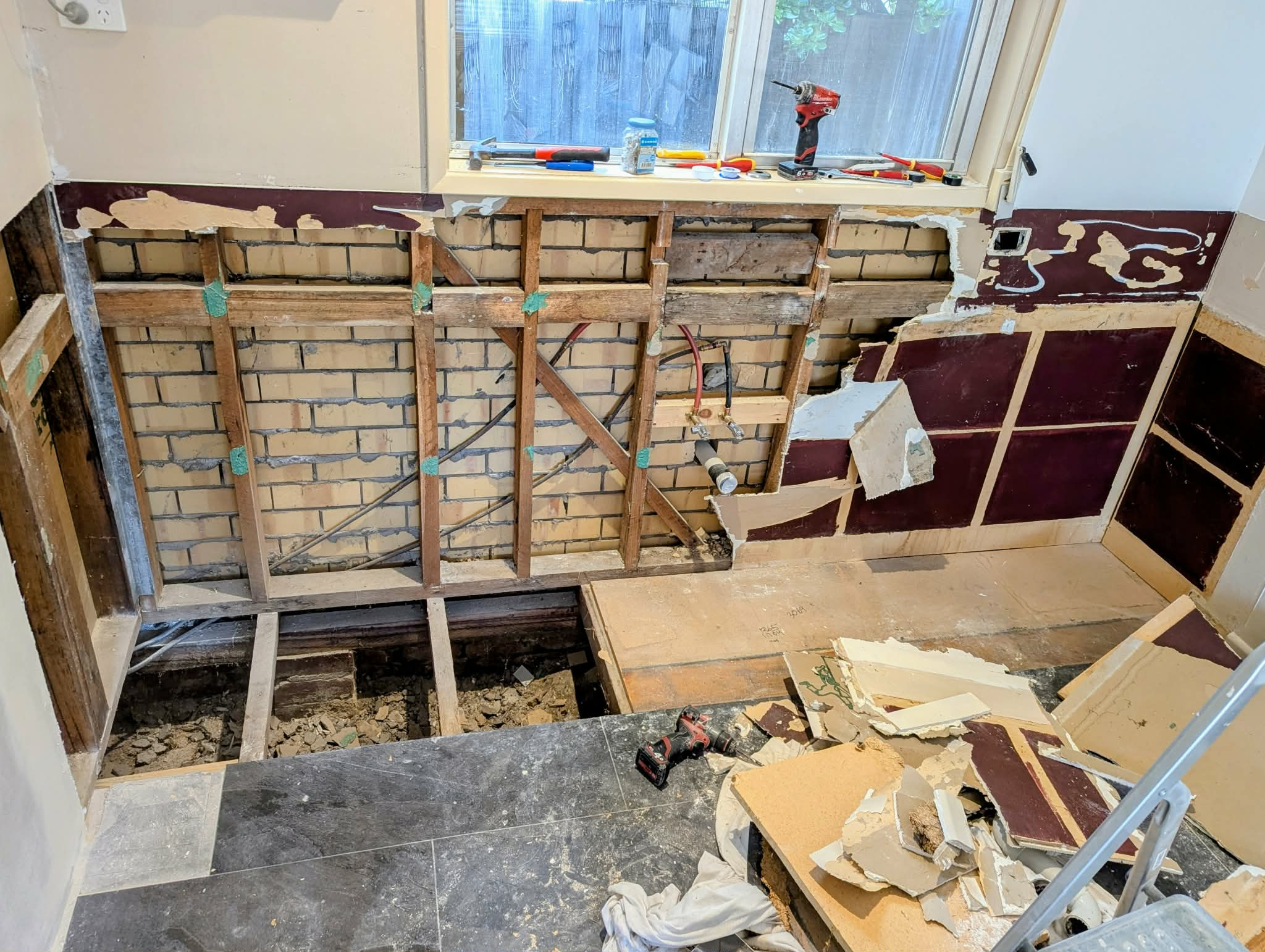
Anguish perfected – today's giant flaws for the rest of time become unseen. The scariest of monsters call from within.
Memories Move Like Seasons
by Jo Curtain
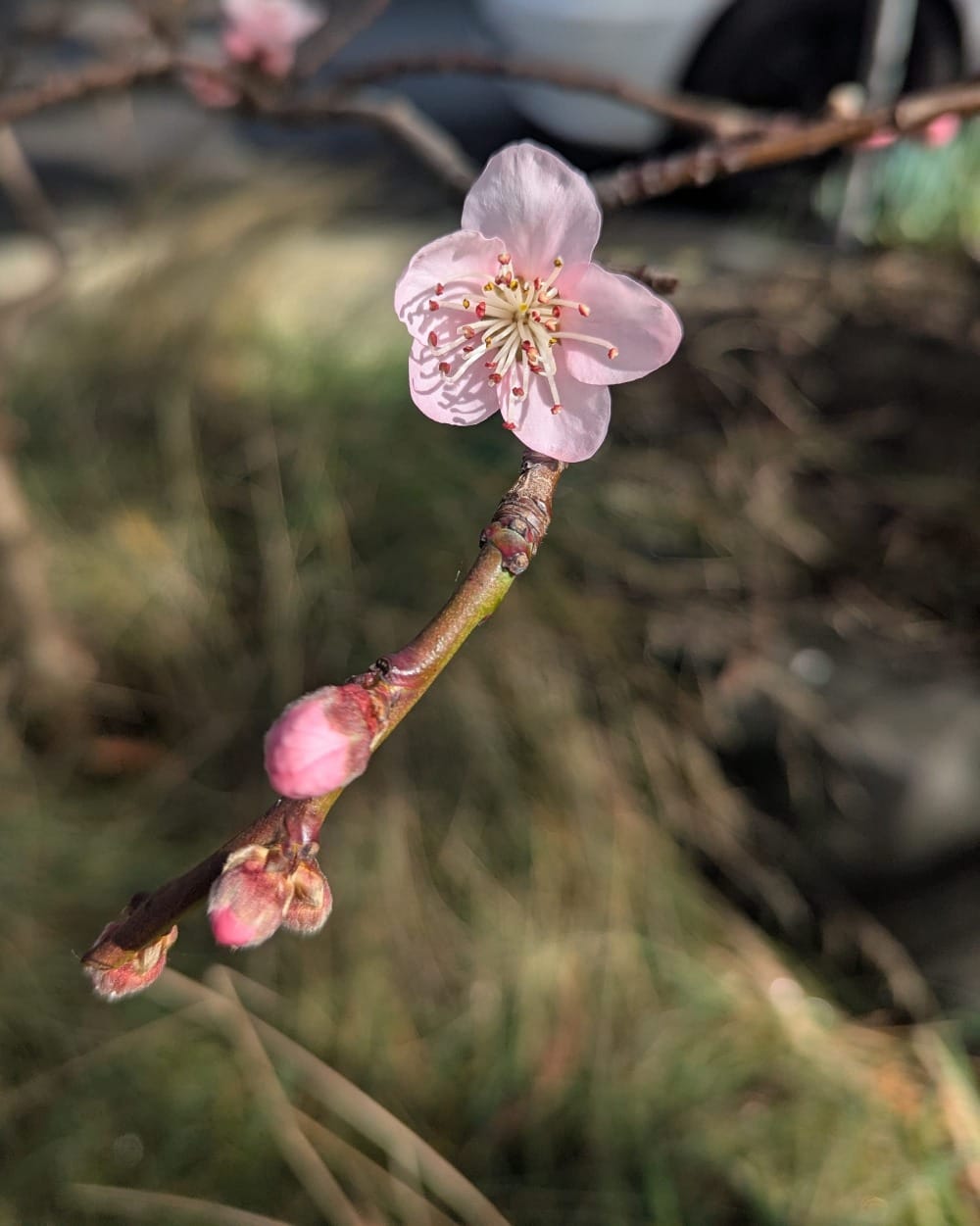
Even though it is mid-September, the cherry blossoms are already a memory, leaving me unable to reconcile that winter is somehow over—it is impossible to prepare for everything, every little mundane thing, like the inflection in your voice when you used to say I love you. Walking down Enmore Road to Blue Elephant Cafe, I remember the last espresso we shared as I navigate around a parked hearse—it is empty—and I feel winter’s breath finally move.
I Write, I Don't Count
by Christopher Monteagle
They stood like that for a while, seemingly watching each other. Jacob looked deeply into the eye of the machine and the machine seemed to look deeply back into him. Then the machine’s eye panned slowly to the left and the red glow continued it’s ceaseless searching across the wastes. Jacob holstered his gun, glanced at Kloe, then followed it’s example.
Poetry
A Pigeon's Lament
by Ivor Steven
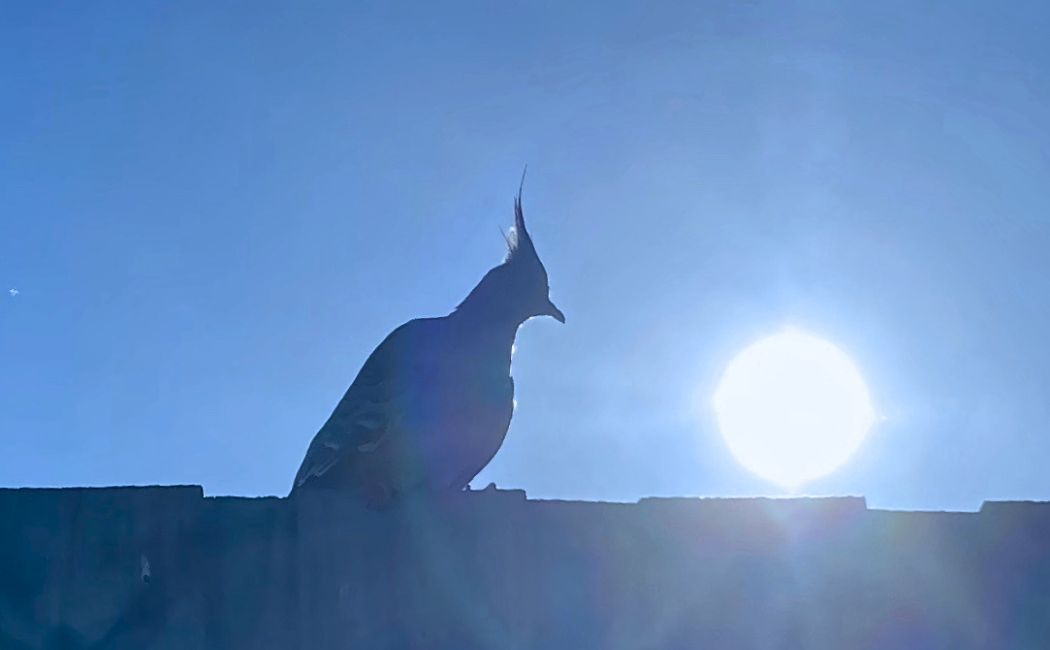
Sitting alone atop this broken wooden fence, I stare into the blinding sun flooding the great blue yonder, wondering if the horror has finally gone. Are we carrier pigeons free to ride the airwaves again, or has nature turned us into messengers of foreboding danger rather than bearers of faithful hope?
Metronome
by Brett J Cole
and song
sung
in weary breath
as unheard muses
drowned by progress
rattle like
cicadas
beneath dirt like
timpani drums
behind
a chorus of
voices
roaring disdain for
disharmony
sung
in weary death.
A spider ate my husband
by Phoebe Hancox
A spider ate my husband.
Perhaps I should have intervened,
Screamed and shouted, kicked the beast away.
But I let it happen; I watched it in all its glory.
Because next, the spider ate my basement.
Then he plopped down in my bathtub.
So I texted my husband with teary eyes.
‘Something terrible has happened’
I was met with question marks.
‘You've been eaten’, I confess
‘Basement parking too,’ I followed up.
He did not find the humour in the way I named our jumping spiders,
Nor did he find it funny that there was now a huntsman taking up residence in our bathroom.
Fall…
by Brett J Cole
to tilt
to lilt
or to wilt
like a tower undone by its lofty aspirations
like a poetic turn of the tongue
like a sad, tired flower come Winter
or perhaps to retire
further afield
where Autumn's referred to as
...
...
Fall
Species of Origin
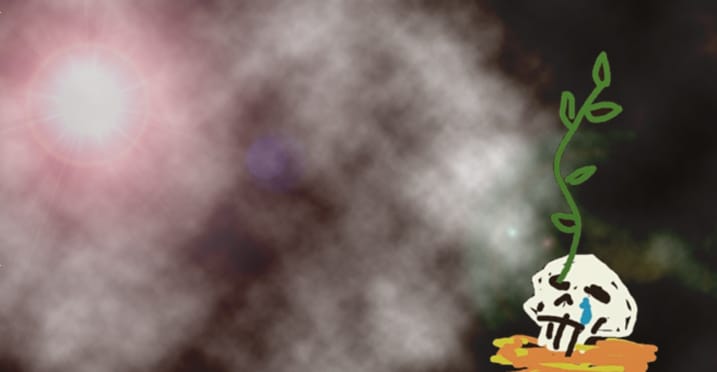
by Brett J Cole
Tried...
Tested.
Tired...
Bested.
"What do you want to be
when you grow up?"
we asked the Earth.
"I've long grown," she sighs.
"Then when we grow up..."
we try again, and she
laughs
and cries
with the howling of
winds,
the deep rumbling of
magma,
the swelling tears of
sea.
"When you're old and gone,"
she tells us, "I'll start over,
to be
the mother I know
I could
be."