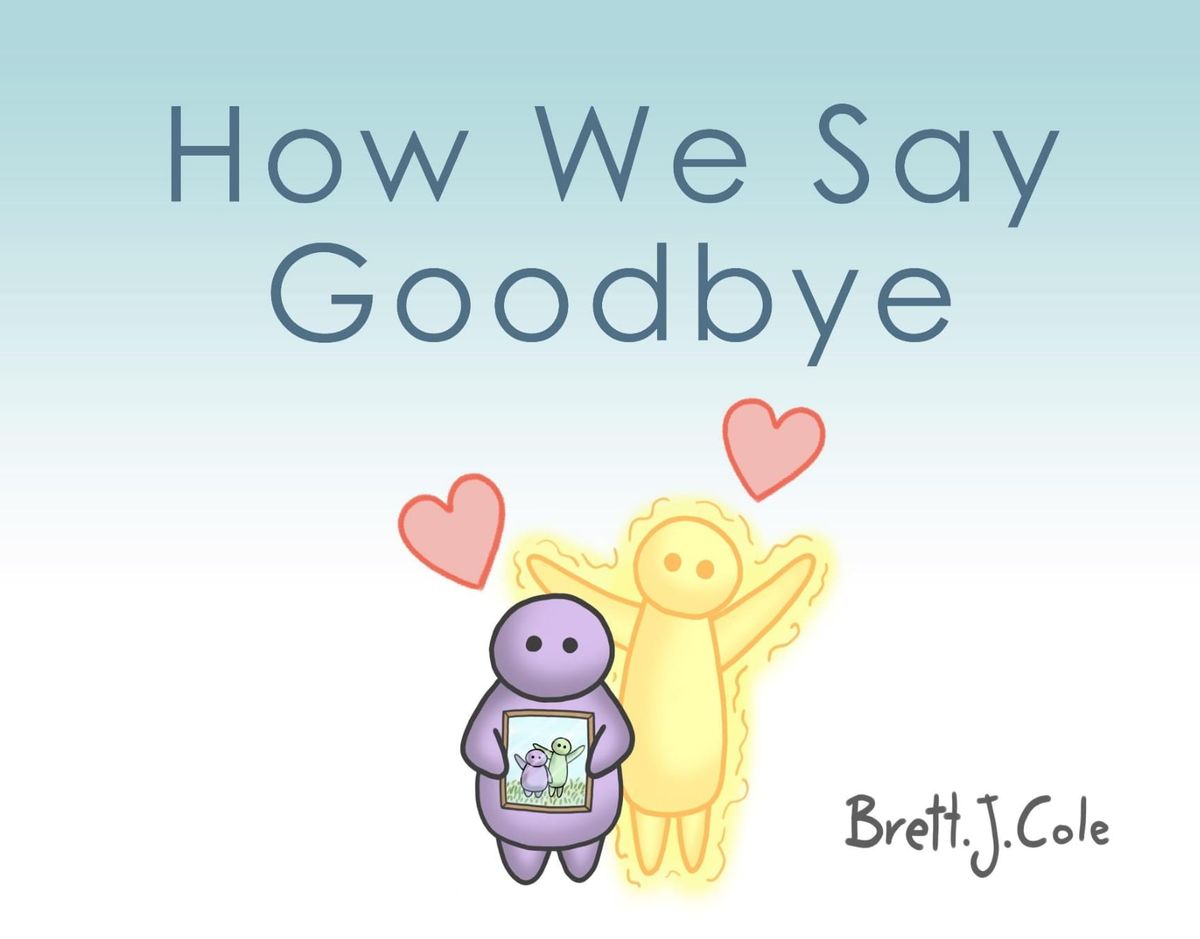
Author Talks – How & Why I Write Children’s Books: Part 2 – How We Say Goodbye
By Brett J Cole
Author Talks Series
In my previous piece, I discussed the thought process behind making what was my first illustrated children’s book, “Shine – a book about Self-Worth”. Two points I touched on when explaining that were that I found myself writing that book as something of a conversation, rather than an actual story narrative, along with how it came as a welcome surprise that adults themselves found value in the book as much as the children they’d buy it for.
I was in fact very touched by some of the feedback I’d received, with many adults saying that the message of being of worth was something they still needed to hear and that my book had conveyed that with the care and validation I’d hoped it might.
I decided that I wanted to begin work on another book that could again be written for adults as much as children – one that didn’t talk down to readers of any age, but rather with them, and with that in mind it didn’t take me long to realise that one of the biggest, and often most difficult, topics that affects us all at some point is... death.
Perhaps a rather ambitious subject to take on, given that it was only my second foray into writing a book for children (and adults), but it was also an idea I’d considered tackling long before creating “Shine”.
Some years earlier, I’d drawn a rough sketch of a small child in a Viking helmet, sadly lighting a nearby funeral pyre. At the time I’d considered the idea of a book discussing different ceremonies related to grieving to normalise any discussions of death itself, but after digging the sketch up years later and looking at it again I realised that something just didn’t feel quite right about this concept.
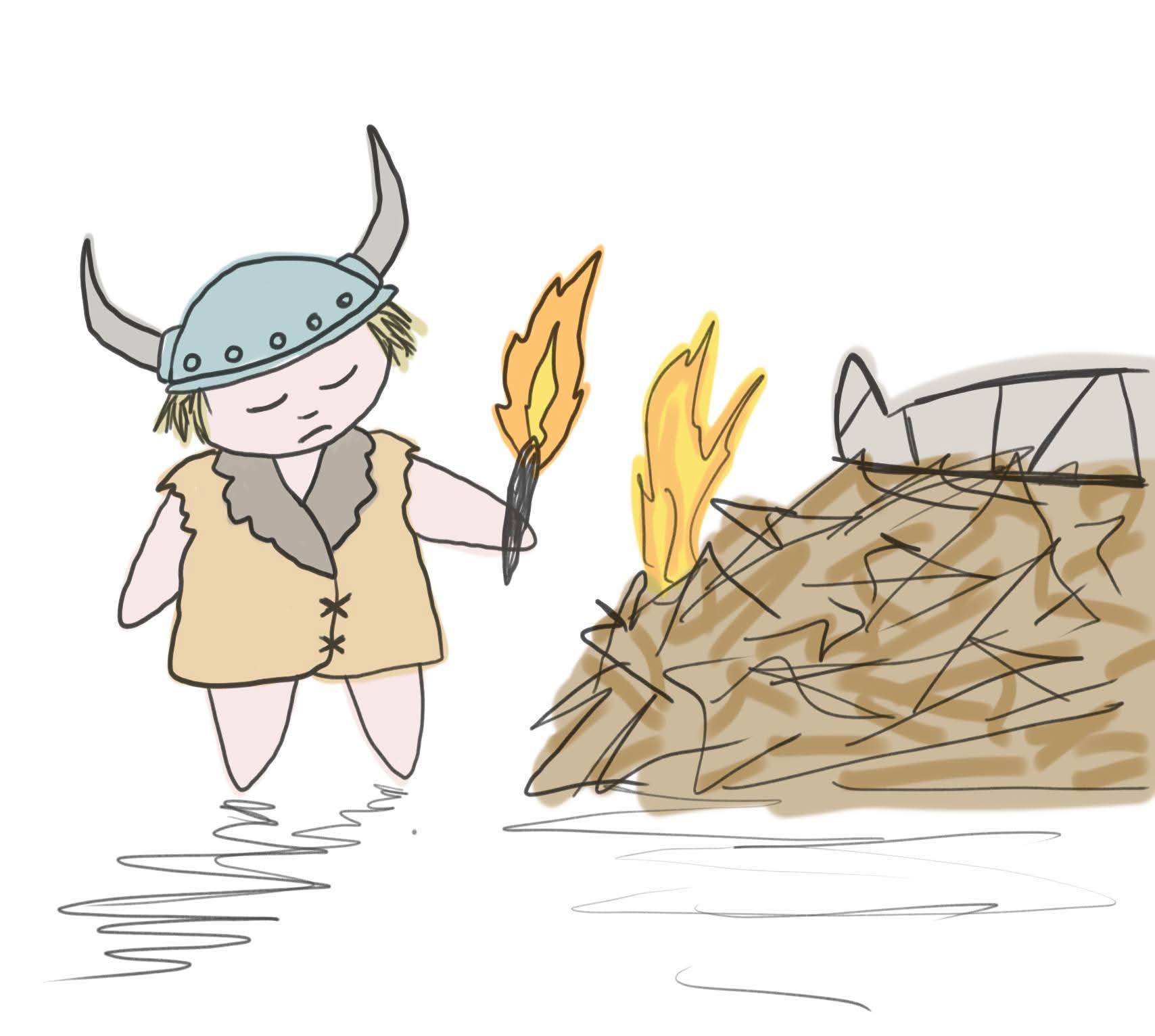
Aside from the fact that the child I’d first drawn wore a horned helmet (something historically inaccurate that I’d humorously even noted above the sketch), I realised that trying to make a book about the different customs many cultures have wasn’t my story to tell.
It somehow felt… intrusive. Their customs, as with their cultures or beliefs, weren’t mine to speak of, and certainly not in regard to something as personal as grief. How they might regard death was entwined with how they regarded life – lived experiences that I couldn’t claim as my own.
I realised then that I wanted my book to still be about death – something that we’re all touched by at some point no matter our background, our status or our beliefs – but just that… the concept of death itself, as well as the many emotions it inspires.
I should note here that I’ve since learned on my journey in making children’s books that sometimes it’s the words that come first, other times the illustrations – with each informing the other as inspiration. For “How We Say Goodbye”, knowing I wouldn’t use that Viking sketch I’d long ago drawn, I knew that I had to instead begin with words.
I was unsure how to even begin writing about such a big topic and so, after considering again that it most certainly needed to be a conversation for young and old alike, I instead found myself jotting down the words, “This is a small book about a very BIG thing”, something I initially wrote as a reminder note to myself.
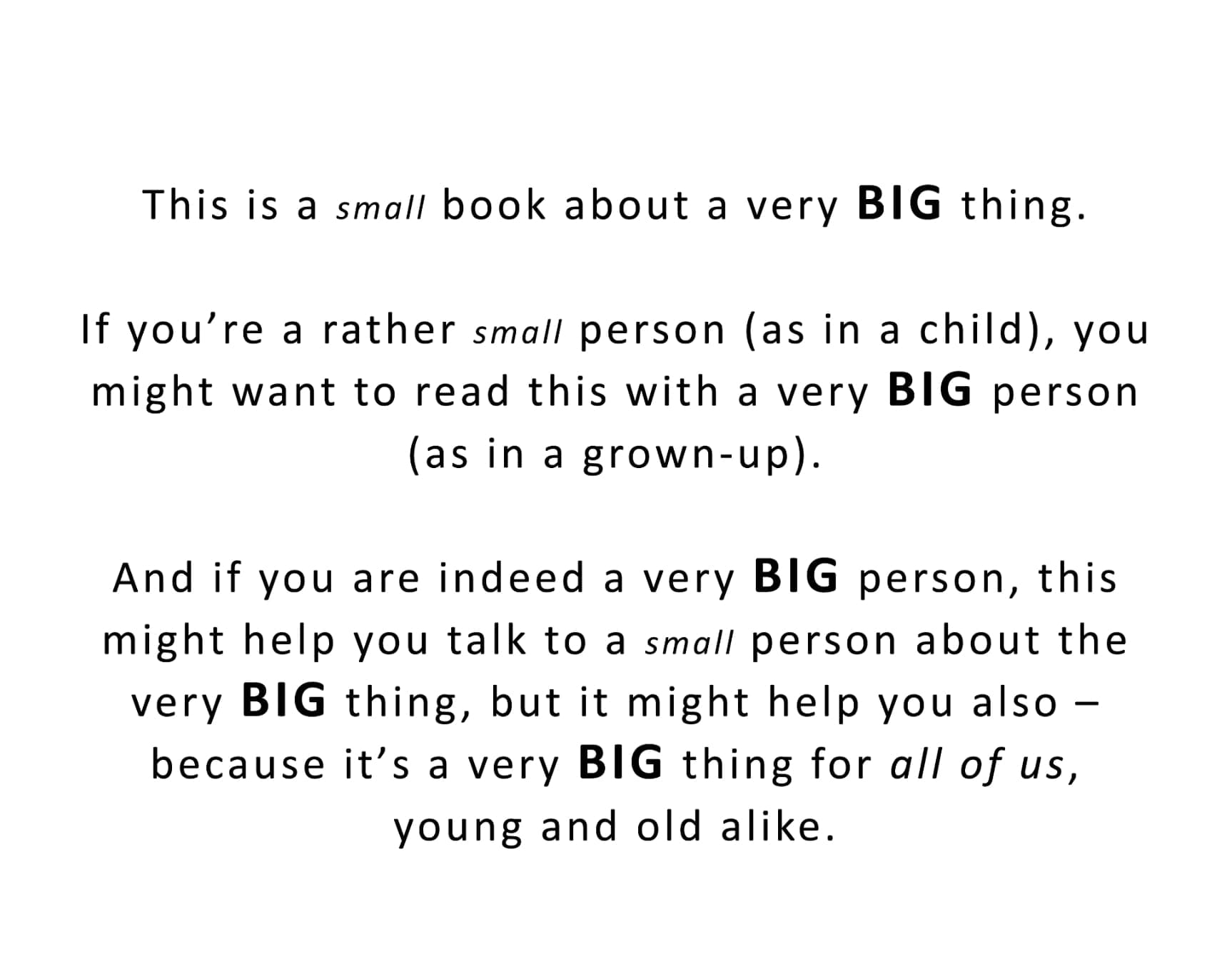
Writing this firstly mattered. It soon mattered a lot, for reasons that became clear as I continued to form the book and the tone it would hold. What began as an idle note to myself became the only way I could think to begin it. Because it was… true.
Death is big, and I didn’t want to diminish that, but nor did I want it to be something feared, especially for children who might suddenly be aware of the reality that death is simply a part of life – a daunting reality that we all face at some point.
I honestly don’t think the book would have become what it is had I not written those first words. Nor do I think the following of what I wrote about death would have come so easily. Everything else just flowed from that first line and I was surprised to finish the whole manuscript for the book that very day I began it.
That one line, and the meaning behind it, also very much shaped what would become my first illustration for the book. I drew a set of scales with an adult to one side and a child to the other, evenly balanced in the fact that death affects us all.
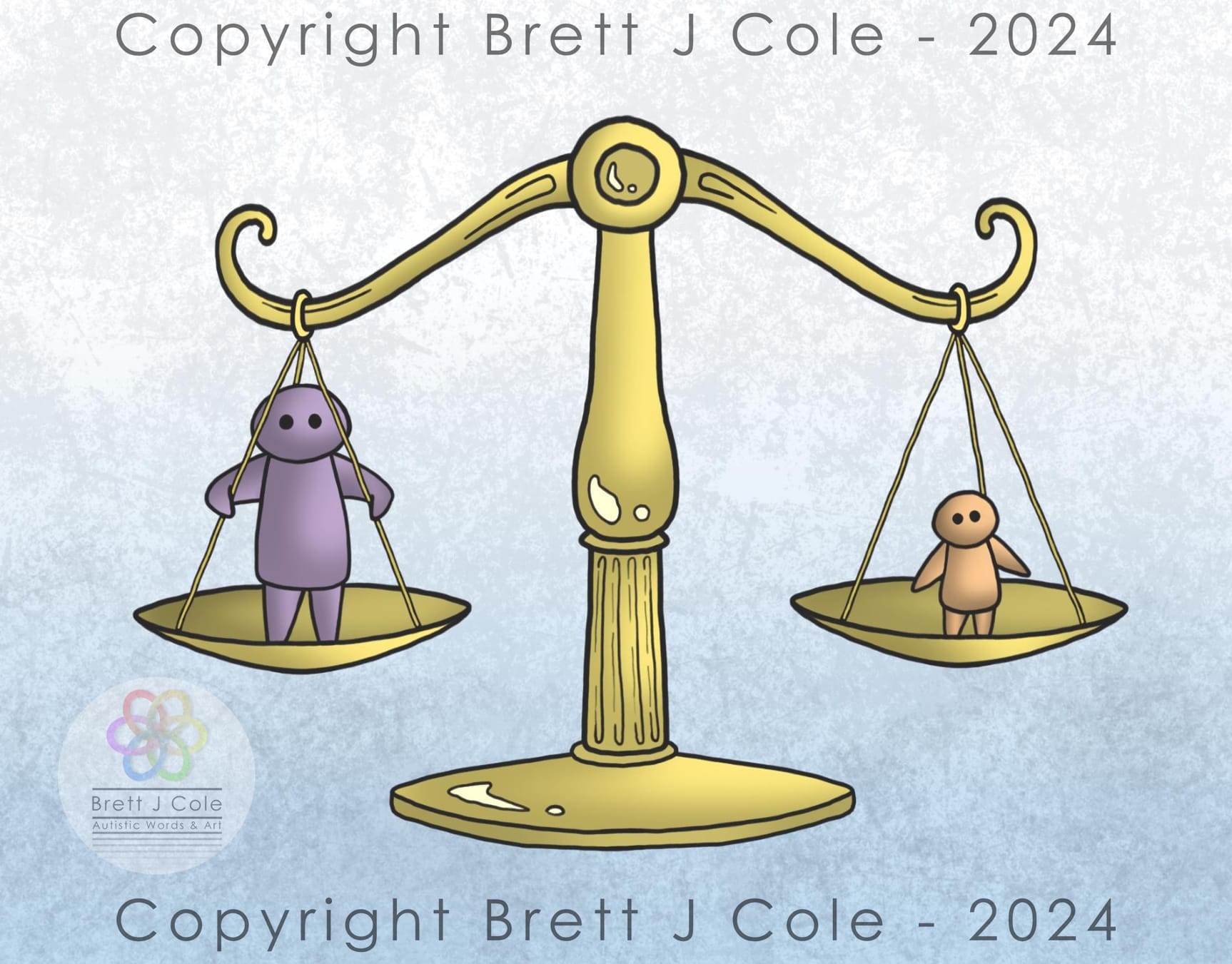
Those scales in fact would become quite important to the book’s discussion of grief (an aspect of death that for many carries more weight than death itself) because I wrote that, should that grief we feel seem heavy, it’s in fact a reflection of the love we held for those we have lost. The weight of one is a testament to the value of the other, hard as that may sometimes be.
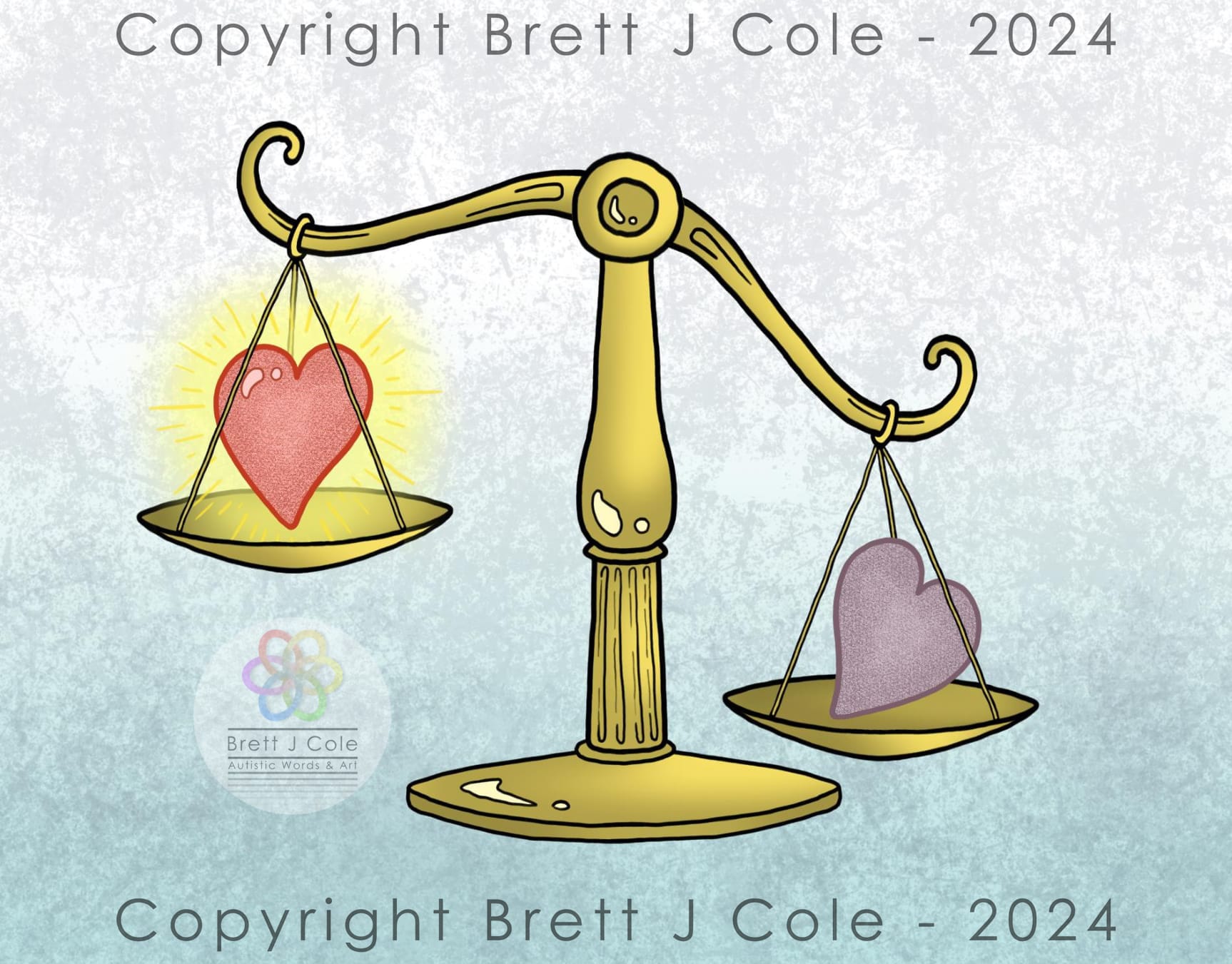
Likewise, the symbolism of those scales was very apt for how I ended the book, leading to perhaps one of its illustrations that I’m most fond of. Because as much as I’d expected it to be daunting to begin a book about death itself, I’d also expected it to be more daunting to decide how to end it. How does one end a book about “the end” itself?
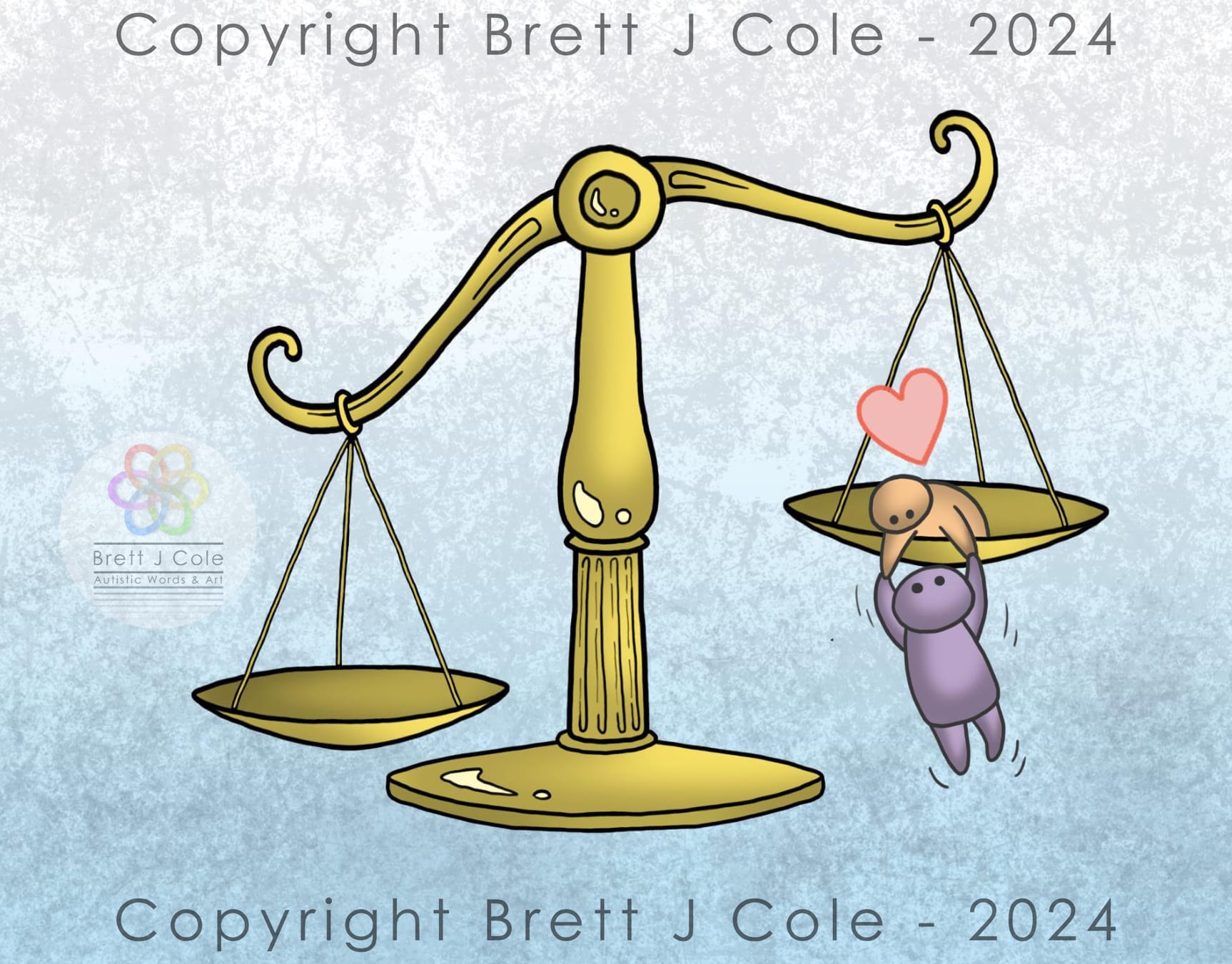
I won’t give away how I chose to answer that question, should you read it for yourself. But I am happy with how it ended, as with how it began, and all else in between. I’m proud of the fact that what began as a “small book about a very BIG thing” covered as much as it did, because I have had many readers tell me it brought them not only great comfort, but also acknowledgement of their grief. More so for the fact that I also wanted this book to assure others that there’s really no right or wrong way to feel such a thing.
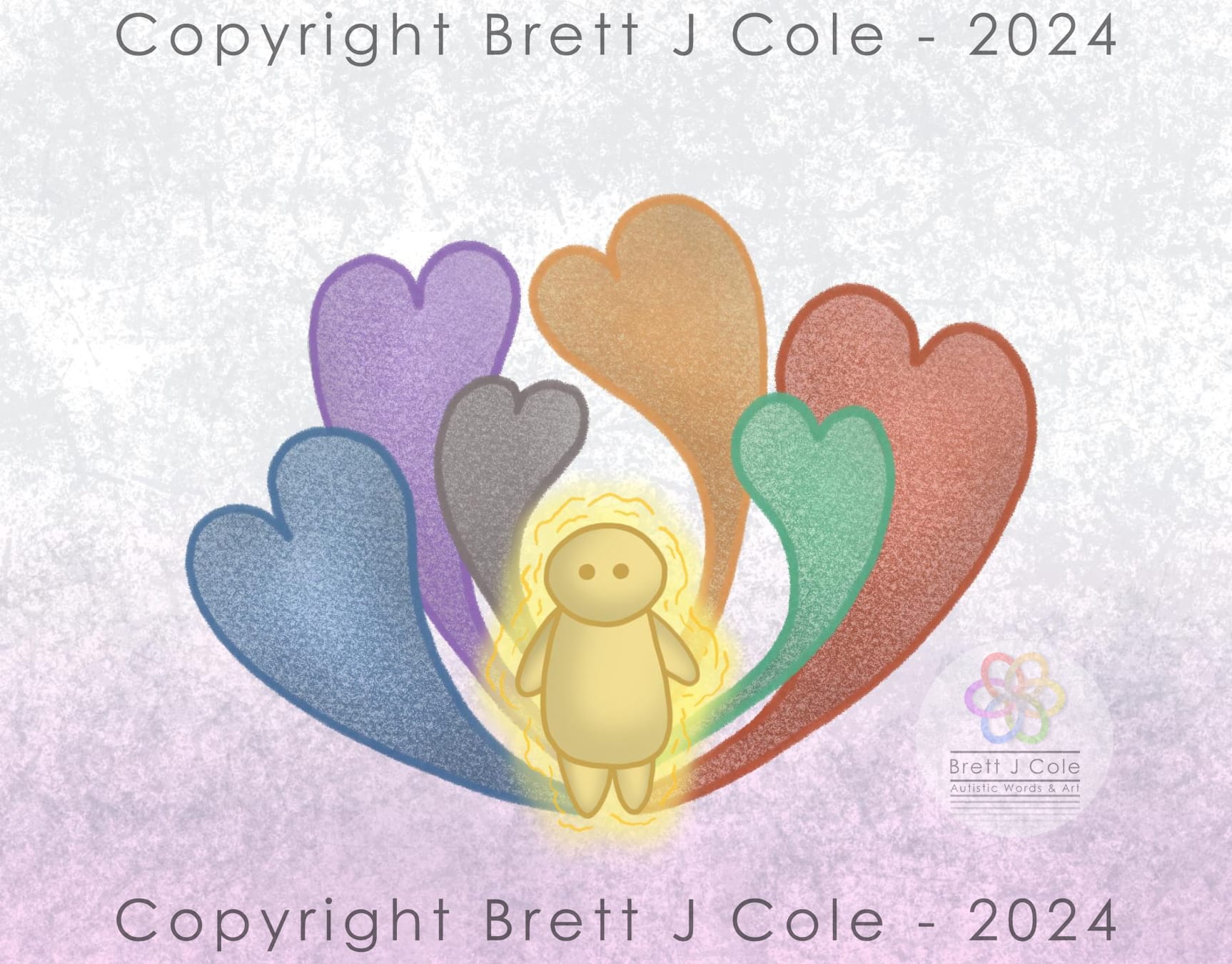
To be honest, I’ve actually found writing this explanation of the book much more challenging than it was to write the book itself, considering the subject. But before I bring this to an end also, I do want to mention another aspect within the book that was easily written, if only for the fact that it was drawn from a conversation with my daughter when she first began to question death itself at the age of five.
She’d asked me that ENORMOUS question that many children have of “Why do we have to die at all?”
I’d always known this question might come at some point, but I’d never really known how I’d answer it. My reply surprised myself as much as it might have her. Rather than simply tell her that death was just “an inevitable part of life”, I found myself inviting her to instead question the lives we have before death by asking her this:
“If you walked into a room and there were two books to read, one that had an ending and the other a book that went on forever without any ending at all, which book would you choose to read?”
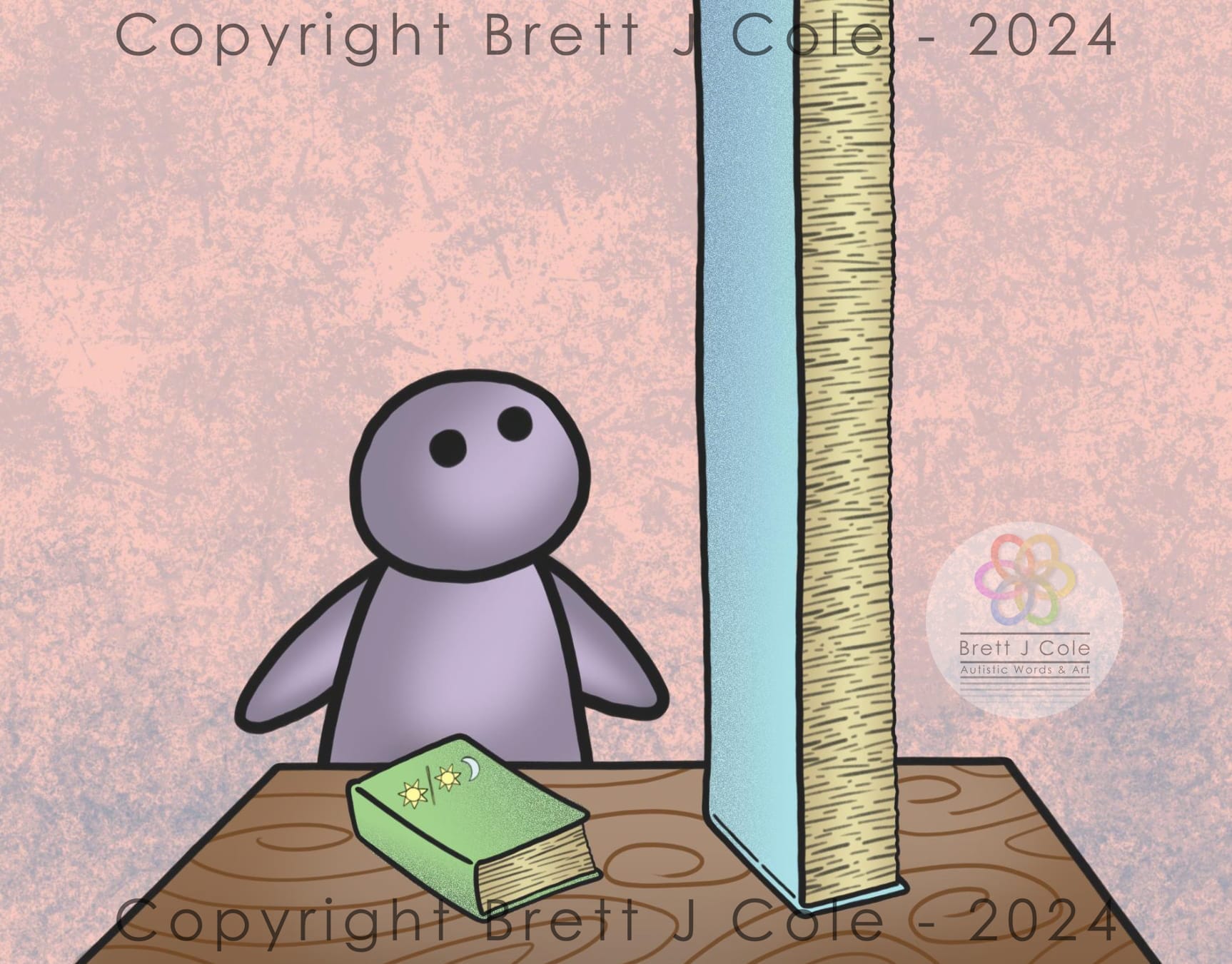
She told me she’d choose the one with an ending, because then she’d know what the story had meant. And in somehow explaining death (to even my own surprise) we’d also talked of the importance of life.
I’ll always be glad that we had that conversation, because it became an important part of that book that I’d hope would help other children navigate such an involved concept. And I’m told by many readers that it has indeed helped their children make sense of death and grieving, along with many adults also.
At the time of publishing “How We Say Goodbye”, I was actually quite touched by the heartfelt responses from those who’d read it. So much so that I remember thinking that if I was going to make illustrated books for adults as much as children, this would be the most important one I’d ever be thankful to have made.
I was wrong.
The following year, while struggling with depression, I began what would be my third book. One that I’d also very much write for adults as much as children, including both myself and the child I’d once been.
I began making a book called “This is not your stone” to discuss navigating abuse, a conversation I’d end up writing as carefully, and as caringly, as I could.
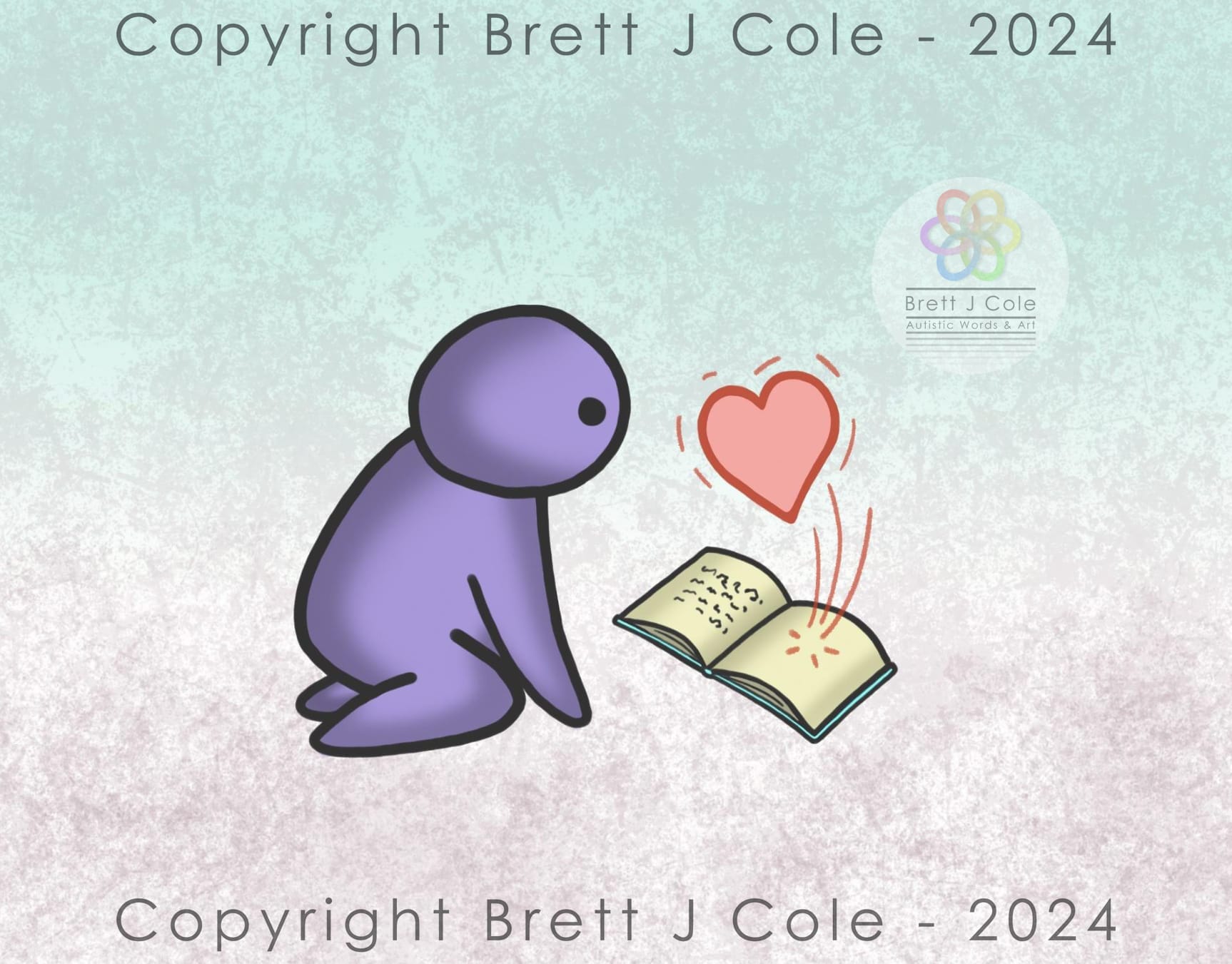
I’ll discuss the process in making that book in Part 3, but when I say that this will always be the book I’m most proud to have written, I also say this with a measure of sadness and empathy, because it’s since sold the most copies of all my books to date, bought for children and adults alike.
Purchase information and Full Previews of my children’s books are at:
https://brettjcole.com/childrensbooks
Given the importance of several of them, I also offer them as Free Payment Optional PDFs at:
https://ko-fi.com/brettjcole
For updates on future children’s books you can follow me at:
https://www.facebook.com/teachtocarebooks
For the very eclectic Autistic everything you can follow me at:
https://www.facebook.com/BrettJCole