FINDING THE THRILLS IN THEATRE: A CHAT WITH EMMA LANGRIDGE
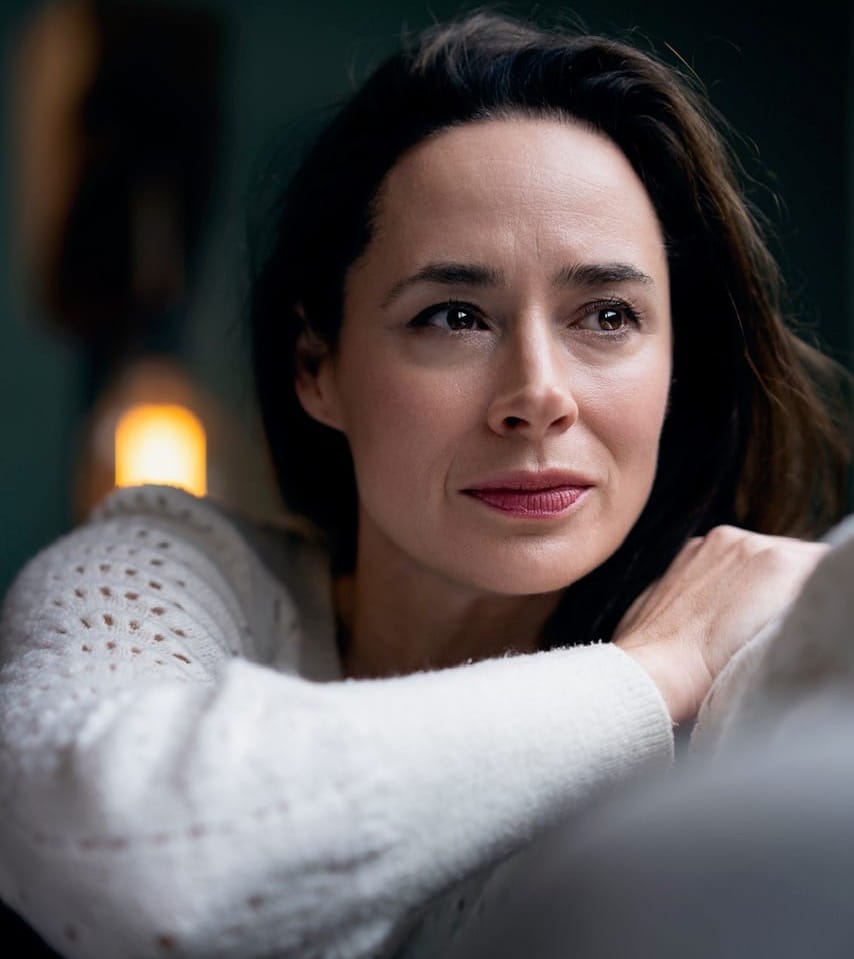
Emma Langridge is a Geelong-based actor with a career in musical theatre and, more recently, spoken theatre. Emma talks with us about her experiences and perspectives on a range of topics, beginning with the slightly slippery notion of stage presence.
Seeing your captivating performance at the Geelong Short Play Festival got us thinking about stage presence. What do you think about the idea of stage presence, do you believe it’s something performers can learn or is it something more instinctive?
It’s funny, I don’t think performers actually talk much about “stage presence” very often, but I absolutely believe it exists. I can’t remember ever sitting down with other actors and analysing it as a skill, yet it’s something I notice constantly as an audience member. When I watch dance performances, my eye always lands on one particular performer. Sometimes it’s the person front and centre, but not always. I’ll deliberately try to watch the other dancers and wonder why my attention keeps drifting back to the same person.
What fascinates me is that it’s rarely about technical ability. Often, every dancer in the group is incredibly skilled. Instead, there’s something in the face, something in the storytelling. It’s not about conventional beauty either. It’s a quality that draws you in and makes you want to keep watching. I honestly don’t know how you teach that. It feels instinctive, almost magical.
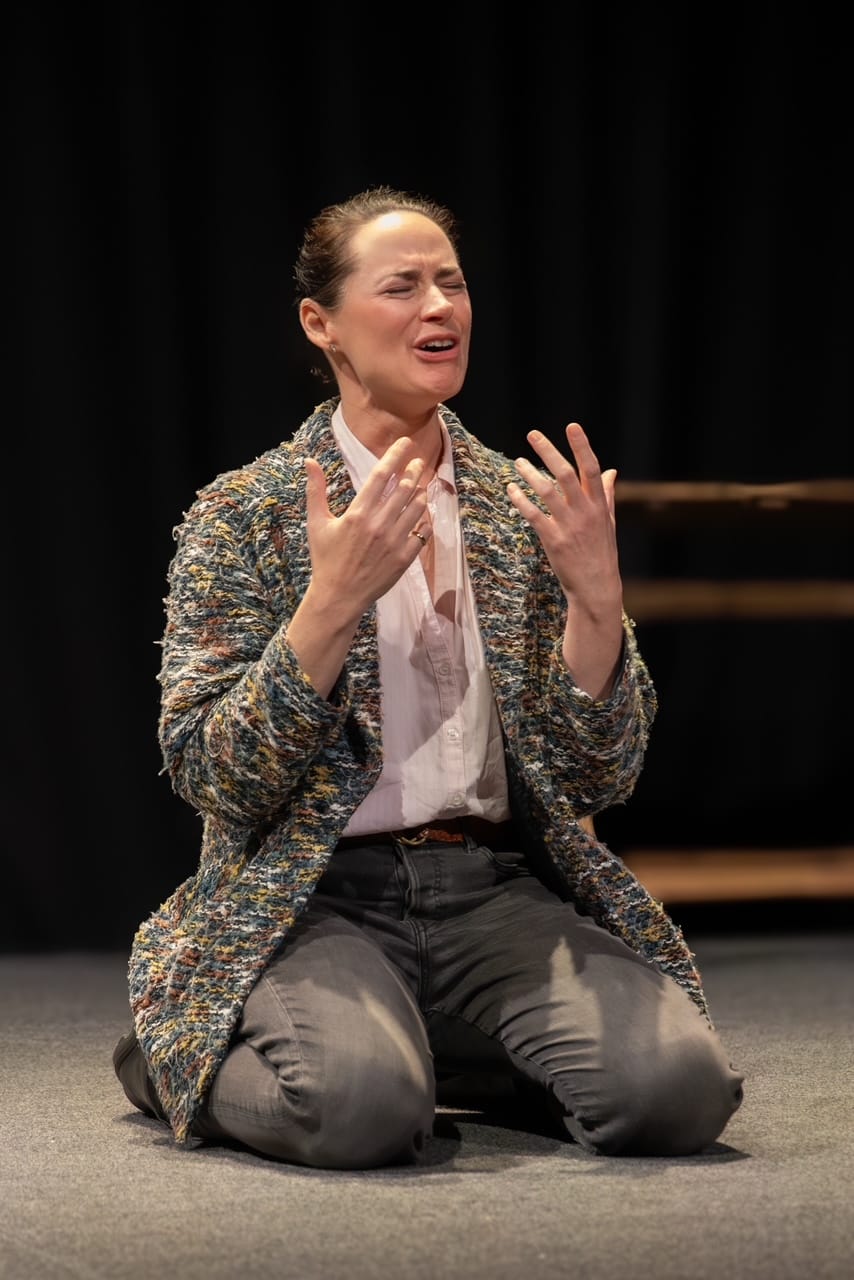
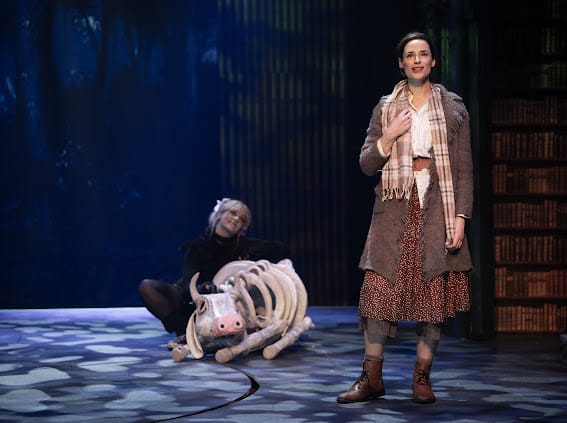
From left to right: The Prodigal Daughter by Paloma Leon (Geelong short play festival 2025); The Baker's Wife in Into the Woods (Geelong Lyric Society 2024)
What about actors's physicality on stage, does that contribute to stage presence?
Yes, physicality does play a role in performance. I’ve watched actors whose natural posture didn’t serve the character they were playing. It wasn’t a deliberate choice or a crafted physicality; it was simply how they stood and moved by default. That can be distracting. If you have a background in dance, that can be incredibly helpful because it gives you a neutral physical starting point. From there, you can build and shape the character’s body. But the mysterious thing we call stage presence still feels impossible to define or break down into technique.
To what extent are movement and performance details fixed during rehearsal, and how much creative freedom do actors usually have?
It really depends on the scale and style of the production. In large musicals, especially those that replicate international productions, everything can be extremely precise. You might literally have to hit a mark on the floor at a specific beat in the music. Blocking and choreography are carefully mapped out because they have to align with lighting cues, sound cues, set changes and the safety of everyone on stage. Within that structure, though, there’s still room for individual interpretation. The framework might be fixed, but actors bring their own nuance and emotional truth to the role.
Smaller productions can be a completely different experience. When I performed in Macbeth last year, our director Molly England gave us a huge amount of freedom. As long as we knew the text thoroughly and were consistent with entrances and exits, we were encouraged to explore and experiment. That freedom was thrilling and slightly nerve-wracking at the same time. It meant the work felt alive and constantly evolving.
I’ve also worked with performers who do the exact same thing every night. That can work perfectly well for audiences, consistency is important, but as a fellow actor watching from the wings, I find spontaneity much more inspiring. There’s something exciting about not knowing exactly how a moment will unfold.
What was having that freedom like for you when working on Macbeth?
I was incredibly lucky with my scene partner. Joshua Monaghan played Macbeth and was wonderfully playful and knew the text inside out. Scenes would change and evolve constantly during rehearsals. It kept me on my toes in the best possible way.
I have to admit, I was slightly terrified because I didn’t feel as confident with the text as he did. But that mix of fear and excitement is often where the best work happens. It pushed me to stay present and engaged.
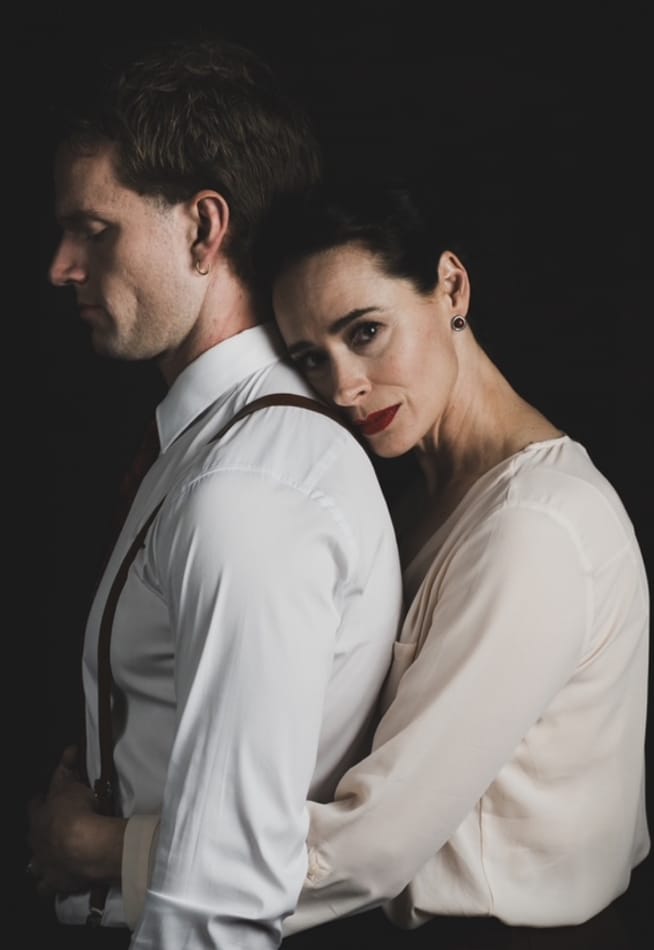
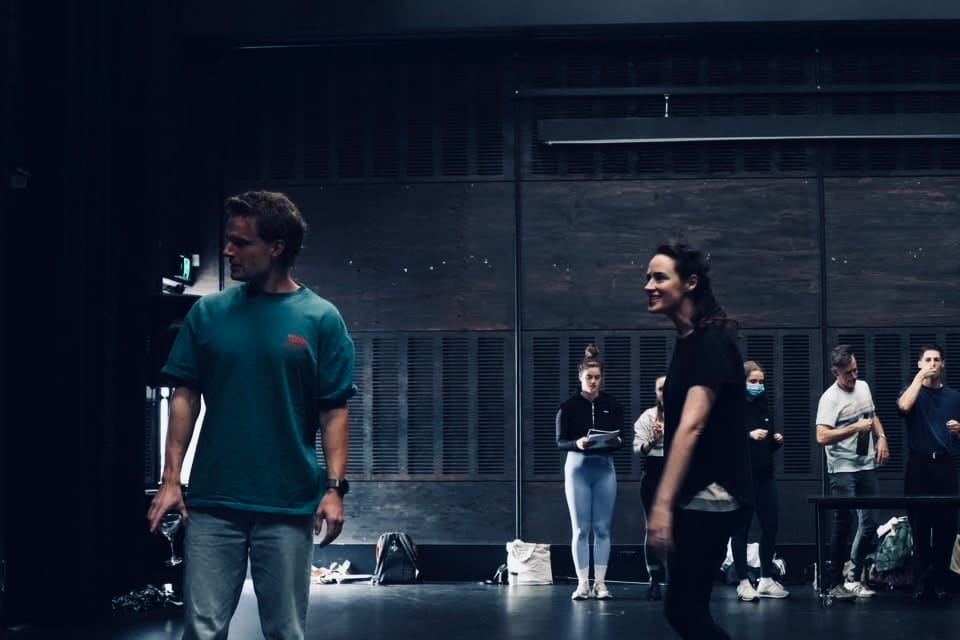
From left to right: Joshua and Emma in Macbeth (Overflow Theatre, 2025); Rehearsing for Macbeth
You’ve played Lady Macbeth. You’ve played the Baker’s wife. Do you have a list of other dream roles you hope to play one day?
Absolutely. Playing the Baker’s Wife in Into the Woods was a dream role for me, one I never imagined I’d get the chance to play. When I was cast, I could hardly believe it.
The role of Fosca in Passion by Stephen Sondheim interests me. I only really happened upon it when I was researching a song for my Into the Woods audition. She sings a devastating song called ‘Loving You’, which has really stayed with me. I’d also love to do August Osage County, it's a mesmerising and disturbing play by Tracy Letts which was then also made into a movie. It’s a real ensemble piece, so being in that cast would be a lot of fun. I’d like to play the role Julia Roberts played, and in 20 years I’d love a crack at the role of the Mother.
Many actors have roles they quietly hope to play one day. I have friends who are waiting for certain shows to arrive in Australia because they know they’d be perfect for specific roles. Even when I’m watching films, I sometimes find myself imagining which parts I’d love to perform on stage. I keep thinking about a film called His Three Daughters, playing the older sister in a play adaptation would be amazing, and I have friends who are perfect for the other roles.
How possible is it to initiate or produce theatre projects in Geelong if you have an idea you want to pursue?
It’s definitely possible. There’s real scope to approach local theatre groups and pitch ideas. If I ever won the lottery, I’d be producing shows immediately! In reality, theatre is a passion alongside my day job, so I have to be selective about where I invest my energy.
I try to keep myself open for opportunities that truly excite me. Sometimes that means saying no to projects, which can be difficult but necessary. I don’t have the time to commit to something that doesn’t spark genuine enthusiasm.
What is the theatre scene like in Geelong?
I’m still getting to know all the companies, but the musical theatre scene here is incredibly strong. There are at least four companies producing high-quality shows, and I’ve loved working with Geelong Lyric on Into the Woods. There are also smaller companies along the coast doing exciting and innovative work.
I’ve seen some fantastic productions at the Woodbin Theatre, which always seems to sell out. There was even professional staging of You’re a Good Man, Charlie Brown a few years ago. Overall, there’s a wonderful sense that theatre is thriving here.
Is there a big difference between musical theatre and straight theatre?
Not as much as people might think. Straight theatre tends to be more text-heavy, which I loved about playing Lady Macbeth. I really enjoyed diving deeply into the language and the psychology of the character. And I’ll be honest, not having to sing removed a lot of stress! I sometimes wonder why I didn’t explore straight theatre earlier in my career.
What have been the highlights of your career so far?
Performing the Prodigal Daughter at the Geelong Short Play Festival was a huge milestone for me. I’d never done a long monologue before, and the piece was quite abstract. Making sense of it and telling that story was incredibly rewarding.
Playing Lady Macbeth and the Baker’s Wife are both experiences I treasure. Early in my career, performing in the Sam Mendes production of Cabaret was another major highlight. It was my first professional show, and at the time I didn’t fully realise how special the experience was. It was only later that I understood what a privilege it had been.
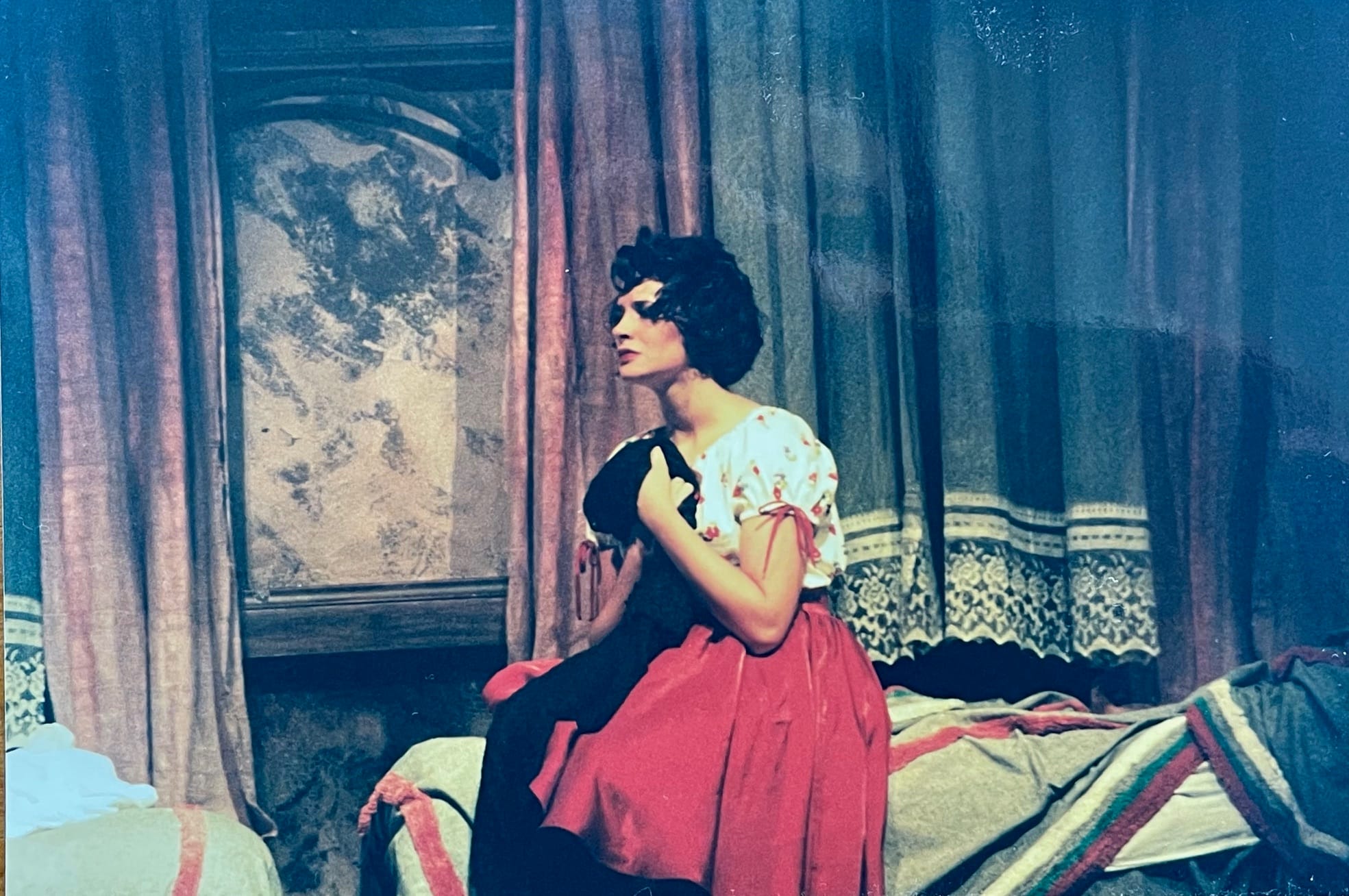
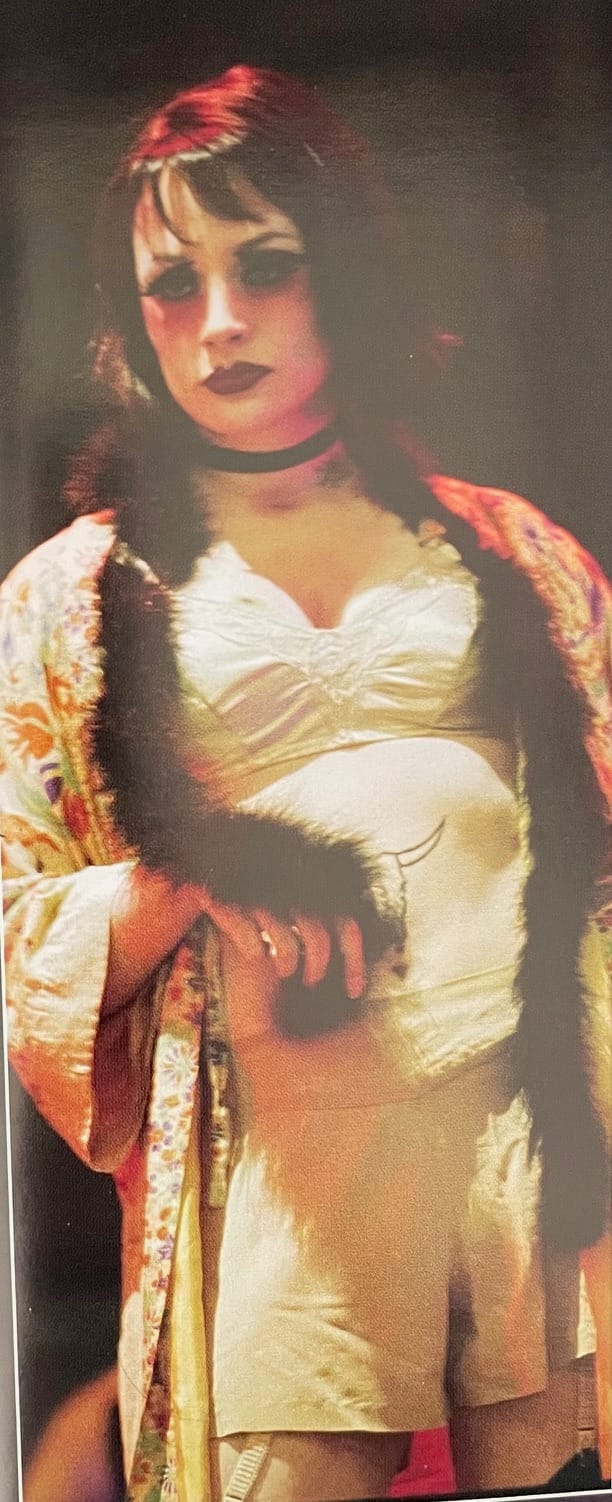
Emma playing Anita in West Side Story (CLOC, Melbourne 2001); Emma playing Texas in Cabaret (Australian tour 2002-2003)
You mentioned Sam Mendes and local director Molly England. What makes a great director?
The best directors create a safe environment where actors feel free to explore and play. Molly England is a wonderful example of this. She has an incredible knowledge of Shakespeare and a very supportive energy. You feel safe in her hands.
That sense of safety is essential. Actors need a clear framework, but they also need the freedom to experiment within it.
What projects or roles are you hoping to pursue next?
I’ve been spending a lot of time watching theatre and continuing to learn as an audience member. There’s an Australian play called Così that I’m considering auditioning for later this year. There’s a role in it that I’d love to play, it’s funny and would be such a joy with the right group of people.
Speaking of auditions. Is the auditioning process stressful?
Very! I used to feel confident auditioning, but after taking a long break I lost my nerve during one audition and completely froze. It was embarrassing, but it taught me a lot.
Over time, I’ve learned that sometimes you’re simply right for a role or you’re not. Rejection is therefore part of the process. I remember once being furious at not getting an audition for something. I didn’t understand how I could be rejected if they hadn’t even seen me, especially when I felt I was right for the part. In fact, I felt so passionately about it that I fought my way to getting an audition through my agent and I ended up being offered the job, which is hilarious!
These days, I’m grateful that theatre isn’t my primary income. My husband is an actor, and I work at a local primary school, which gives me structure and stability. I have enormous respect for people who pursue acting full-time, it’s a tough industry, especially in Australia. For me, theatre is a passion I get to pursue for the love of it, and that makes every opportunity feel even more special.
Enjoy these types of articles? Why not become a subscriber, it's free and it means you'll get new articles and stories straight to your email!